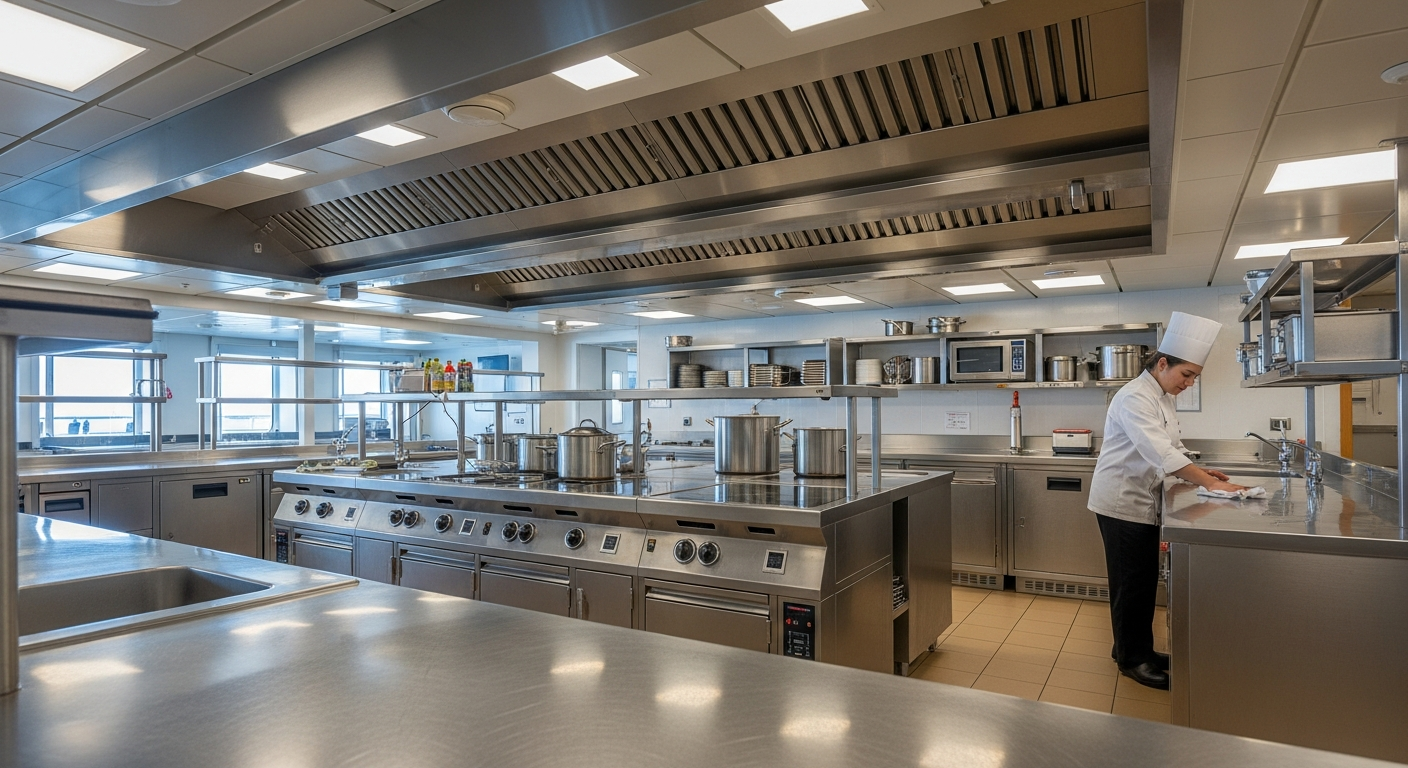

The CDC inspects cruise ship kitchens for 13 specific food safety items covering employee health, food temperature control, cross-contamination prevention, and equipment sanitization. We extracted these items from every recent inspection and calculated a food safety sub-score for each ship. The results are revealing.
How We Scored the Kitchens
The CDC’s Vessel Sanitation Program inspects 44 total items, but only 13 are specifically about food handling and kitchen operations (items #11-20 and #24-26). These cover critical areas like employee hygiene, food temperature maintenance, cross-contamination prevention, cooking temperatures, and equipment sanitization.
We isolated these 13 items from every recent inspection report and calculated a food safety sub-score for each ship. A perfect score of 100 means zero food-related deductions. Our full food safety rankings show every ship’s score.
The Cleanest Kitchens
The ships with the highest food safety sub-scores have zero or near-zero deductions on food-specific inspection items. These galleys maintain proper food temperatures, use correct sanitization protocols, and employ well-trained food handlers.
What these ships have in common: strong crew training programs, newer galley equipment, and cruise lines that invest heavily in food safety compliance. Many of the top scorers are newer ships from Royal Caribbean, Celebrity, and Disney—lines that have made food safety a brand differentiator.
See the full list: Cleanest Cruise Ship Kitchens
The Dirtiest Kitchens
The ships with the lowest food safety sub-scores have multiple deductions across food temperature, employee hygiene, and equipment sanitization. The most common issues we found:
- Food temperature violations: Cold food above 41°F or hot food below 135°F
- Employee hygiene: Inadequate handwashing procedures or ill employees working in food areas
- Cross-contamination risks: Raw and cooked foods stored improperly, shared cutting surfaces
- Equipment sanitization: Improperly cleaned or maintained food contact surfaces
The ships with the most food safety deductions tend to be older vessels where galley equipment is dated and harder to maintain to modern standards. Some have improved dramatically after failing inspections, while others show recurring patterns.
See the full list: Cruise Ships With the Most Kitchen Violations
What This Means for Your Cruise
A few important caveats: even the “dirtiest” cruise ship kitchens are still regulated and inspected more rigorously than most restaurants you eat at on land. The CDC’s VSP program is one of the most thorough food safety inspection regimes in the hospitality industry.
That said, if food safety is a priority for you (and it should be), choosing a ship with a strong food safety record is smart. Newer ships, premium cruise lines, and ships with recent high-scoring inspections are your best bets.
Explore the data:
- Full Food Safety Rankings
- Cleanest Kitchens
- Ships With Most Kitchen Violations
- Browse All Ship Profiles

While you're here, try our free cruise tools:
Explore real CDC inspection scores and outbreak data for every cruise ship.