

⏱️ 5 min read
Tea TempLast updated: September 12, 2026
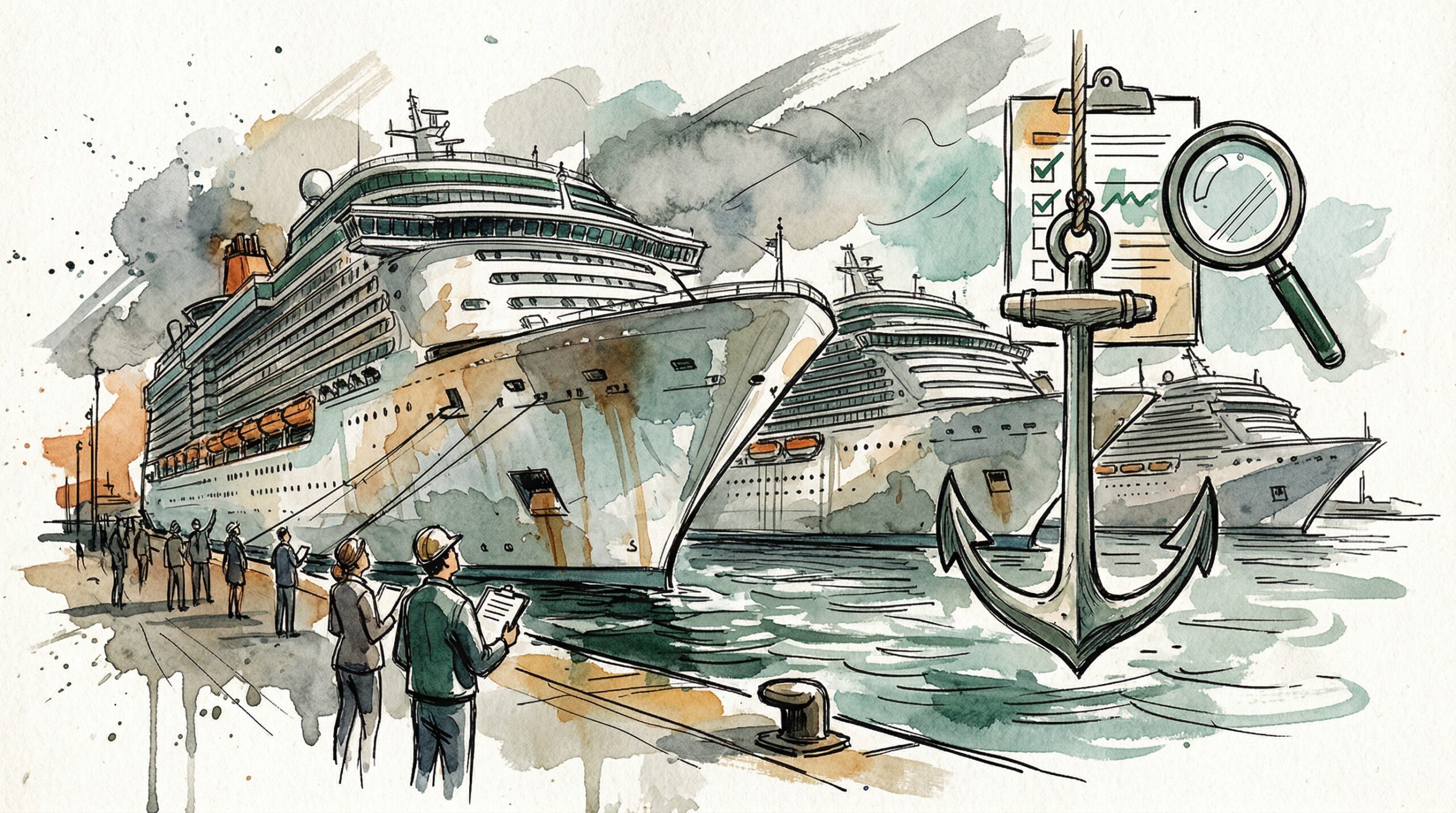
Here’s something most first-time cruisers don’t know: every cruise ship that sails from a U.S. port gets surprise inspections from the CDC. No warning. No time to prep. Just federal health inspectors showing up with checklists, thermometers, and a deep commitment to swabbing surfaces.
These inspections are public record. And yet, somehow, most people book a $3,000 cruise without spending 30 seconds checking whether their ship passed its last health inspection.
We made that 30-second check ridiculously easy.
How to Look Up Any Ship’s Inspection History
Go to the Inspection Lookup page, type in your ship’s name, and you’ll see its complete CDC inspection history. Every score, every date, every result.
Not sure which ship you’re booked on? Check your booking confirmation — it’ll list the ship name. Then come back here and look it up. We’ll wait.
What the CDC Actually Inspects
The CDC’s Vessel Sanitation Program (VSP) has been inspecting cruise ships since 1975. Their inspectors check:
- Water supply — is the drinking water safe? Are the systems properly maintained?
- Food safety — galley temperatures, food storage, cross-contamination risks, buffet protocols
- Pool and spa sanitation — chemical levels, filtration, hot tub maintenance
- Housekeeping — cabin cleanliness, public area hygiene, laundry procedures
- Pest management — yes, cruise ships can have pest issues. You’re welcome for that mental image.
- Child activity centers — diaper changing protocols, toy sanitation, handwashing
- HVAC systems — ventilation and air quality
- Medical facilities — medical waste handling, isolation procedures
Ships are scored out of 100. Anything 86 or above is a pass. Below 86 is a fail — and yes, ships do fail.
What the Scores Mean
Here’s the quick scoring guide:
- 96-100: Excellent. This ship is running a tight operation. Minor nitpicks at most.
- 86-95: Passing. Some issues found, but nothing critical. Most ships fall here.
- Below 86: Failed. Significant violations. The CDC publishes detailed reports on what went wrong.
For context, the industry average typically sits in the mid-90s. So a ship scoring 88 isn’t great, but it’s not a health hazard. A ship scoring 78? That’s a conversation.
Going Deeper: Individual Ship Profiles
The inspection lookup gives you the overview. But if you want the full story — violation breakdowns by area, trend analysis, outbreak history, and how the ship compares to its fleet — click through to the ship’s full profile.
Each ship profile breaks down every inspection into violation categories. You can see exactly where the issues were: was it a galley temperature problem? A pool chemical issue? A housekeeping miss? The details matter more than the top-line number.
Should You Cancel Over a Bad Score?
Probably not. A single low score doesn’t mean the ship is a floating petri dish. Ships get reinspected, and most fix their issues quickly. What you’re looking for is patterns:
- Is the score trending down over multiple inspections?
- Has the ship had repeated outbreaks?
- Are violations in the same area every time (suggesting a systemic issue)?
Our rankings page makes these patterns easy to spot. And if you’re comparing two ships for your next trip, the comparison tool puts them side by side.
The point isn’t to scare you. It’s to make sure you’re making an informed decision with the same data the cruise lines have — but don’t always advertise.
Explore Our Web Stories


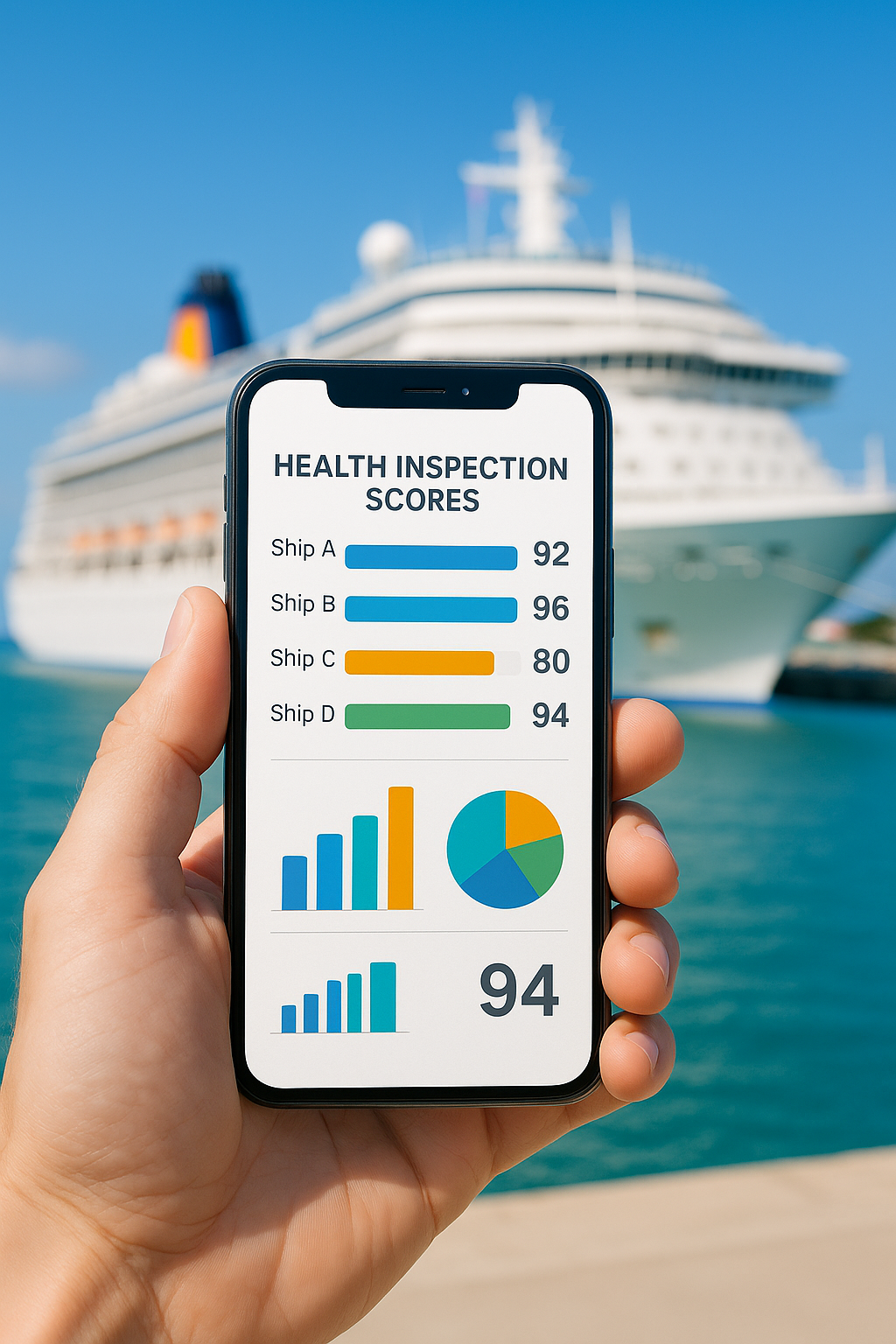
Does the CDC Inspect International Cruise Ships?
Yes — and “international” is doing a lot of work in that question, because it’s not about where a cruise line is headquartered. The CDC’s Vessel Sanitation Program (VSP) has jurisdiction over any ship that meets two conditions: it carries 13 or more passengers, and it sails a foreign itinerary that includes a U.S. port. Meet both, and federal inspectors can — and will — show up unannounced, whether you’re on a Carnival megaship out of Miami or a 12-cabin Windstar sailboat out of San Juan.
It doesn’t matter that most “American” cruise ships aren’t actually American. Nearly every ship sailing from a U.S. port is foreign-flagged — Bahamas, Panama, Malta, Bermuda — for tax and labor-law reasons that have nothing to do with sanitation. VSP doesn’t care about the flag on the stern. It cares about the passenger count and the itinerary. A ship that never leaves U.S. waters and carries fewer than 13 passengers is the rare exception that falls outside VSP’s reach; basically every oceangoing cruise ship you’d actually book falls inside it.
The program has been doing this since 1975, running under the authority of the Public Health Service Act (42 U.S.C. § 264), after a run of nasty gastrointestinal outbreaks convinced the CDC that the industry needed a permanent watchdog. Today it covers cruise lines across the full spectrum — Carnival, Royal Caribbean, Norwegian, MSC, Disney, Celebrity, and luxury/expedition lines like Viking and Regent — as long as their ships touch a U.S. port on a foreign run. Ship Tea tracks itinerary data for 155 ships across 26 lines, and the overwhelming majority of them are under VSP jurisdiction for exactly this reason.
Here’s the part that trips people up: inspection frequency depends on how “international” the itinerary actually is.
- Standard rotation (Caribbean, Bahamas, Mexico): inspected twice a year, no notice given
- Extended international voyages (world cruises, long Asia/Europe repositioning runs): may only get inspected once a year, since the ship spends long stretches outside U.S. jurisdiction — but it’s reinspected the moment it returns to a U.S. port
- Under 13 passengers or no U.S. port call: outside VSP’s authority entirely
So a ship doing back-to-back 7-night Caribbean sailings out of Fort Lauderdale gets checked more often than a ship doing a 120-day world cruise — not because the world cruiser is cleaner, but because it’s simply in U.S. waters less.
In 2025, more than 20 million passengers embarked from North American ports, and virtually all of those sailings fall under this same “13 passengers + foreign itinerary + U.S. port” rule. Every one of those inspections — international mega-ship or small-ship expedition line — lands in the same public database, scored on the same 100-point scale, 86 to pass. You can pull up any specific ship’s record on our Inspection Lookup tool, or see which lines are turning in the best scores on our Cleanest Cruise Ships rankings.



Try our free cruise games & calculators
Explore real CDC inspection scores and outbreak data for every cruise ship.