
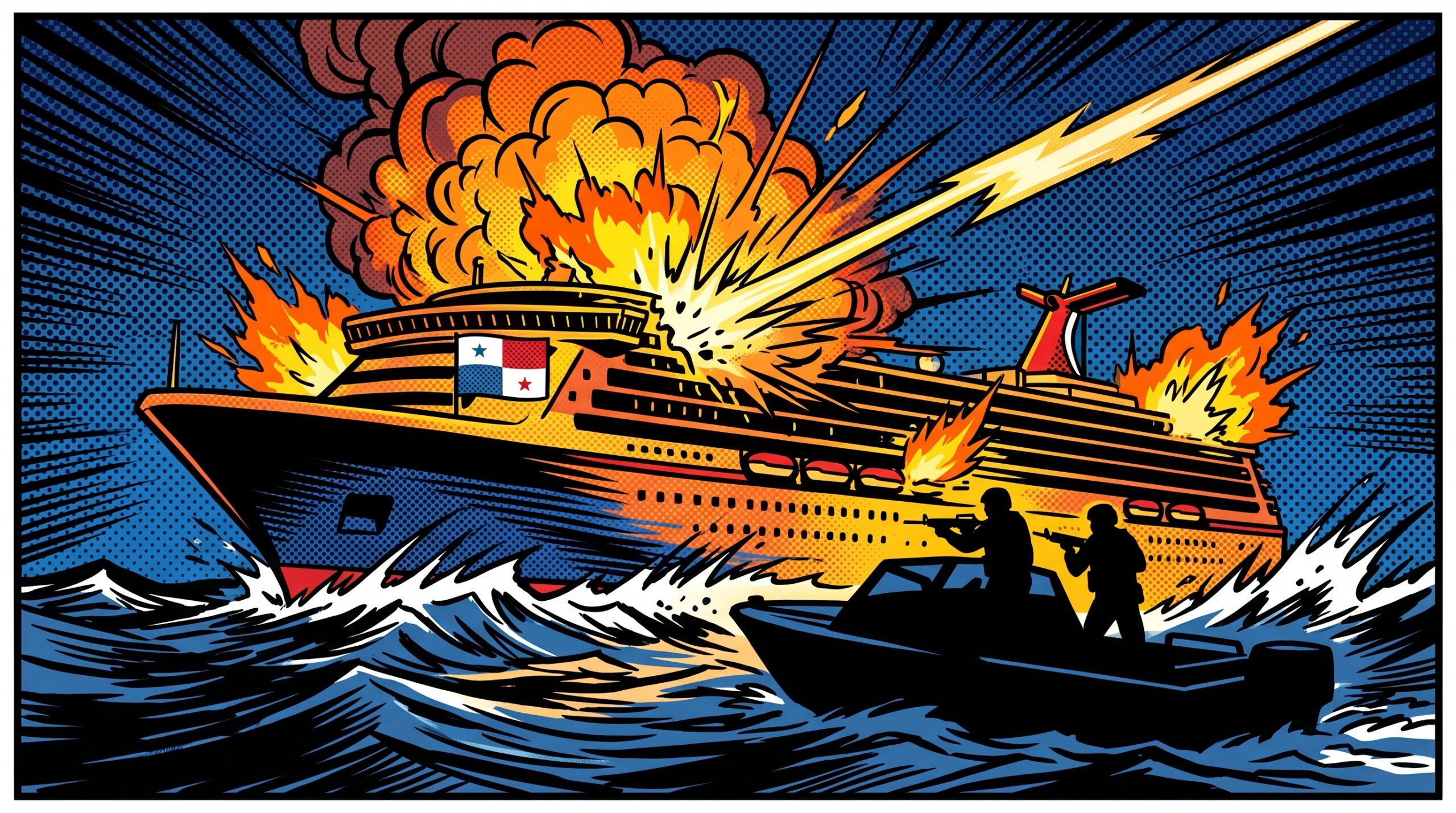

A cruise missile. Fired at a civilian ship. In one of the world’s most geopolitically charged waterways. If you thought the most dangerous thing that could happen at sea was a norovirus outbreak or a rogue wave, the Arabian Gulf just sent a memo.
Tea TempLast updated: June 3, 2026
Iran’s Islamic Revolutionary Guard Corps — the IRGC — reportedly fired a cruise missile at the MSC Sariska V, a Panama-flagged commercial vessel, in the Arabian Gulf. The strike is being framed not as an accident or a warning shot across the bow, but as a direct challenge to a US naval blockade operating in the region. Read that again. A state military force fired an actual missile at a civilian commercial ship because of a geopolitical standoff happening around it.
What Exactly Is the MSC Sariska V?
MSC — Mediterranean Shipping Company — is one of the largest shipping operators on the planet. The Sariska V is a commercial vessel flying a Panama flag, which is one of the world’s most common “flags of convenience” — a registration that lets ships operate under more favorable regulatory and tax conditions. That flag, in theory, shouldn’t make a ship a military target. In theory.
Panama flag. Civilian operator. Arabian Gulf. Cruise missile inbound. The gap between “routine commercial shipping route” and “active theater of military engagement” has apparently closed to zero.
The US Blockade and Why This Ship Was in the Middle of It
Context matters here, even when it’s deeply uncomfortable. The Arabian Gulf has been a pressure cooker for years — US naval presence, Iranian countermeasures, proxy conflicts, tanker seizures. A US naval blockade operating in the region creates a geography of contested maritime space, and commercial shipping lanes run directly through it.
Ships don’t reroute because the news is bad. They sail their scheduled routes because cargo doesn’t wait for geopolitical calm, and the crews aboard — real people with contracts and families — are aboard because that’s the job. The IRGC reportedly framed this strike as a deliberate challenge to that US blockade, which means the MSC Sariska V wasn’t targeted because of anything it did. It was targeted because of where it was.
Let that sink in.
This Is the Pattern That Makes the Arabian Gulf So Dangerous
This isn’t happening in a vacuum. The Arabian Gulf and surrounding waters — the Strait of Hormuz, the Gulf of Oman — have been a repeat venue for attacks on commercial shipping. Tanker seizures, drone strikes, limpet mines on hulls. The IRGC has a documented history of using commercial vessels as leverage in broader geopolitical disputes.
What makes this particular incident stand out is the weapon and the framing. A cruise missile — not a speedboat, not a drone buzzing close for intimidation — is a precise, deliberate military strike. And the stated rationale of “challenging a US blockade” suggests this was calculated, not impulsive. Someone made a decision that a civilian vessel was an acceptable target in a power play between nation-states.
The people crewing the MSC Sariska V had no vote in that decision. If you ever want context for why how cruise lines and shipping companies treat their crew matters beyond the transactional, start here — these are human beings placed in the crossfire of conflicts they didn’t start.
The Civilian Shipping Industry Has a Major Problem
Here’s the uncomfortable through-line: commercial shipping has been a soft target in state conflicts for years, and it keeps happening because commercial operators are not military forces. They can’t engage. They can’t defend. They reroute when routes become truly untenable — but “truly untenable” is a high bar when contracts are in play and fuel costs for diversions are astronomical.
The global supply chain running through the Arabian Gulf is not hypothetical — it’s fuel, consumer goods, raw materials. Every time a vessel is struck or seized, the calculus for every other ship operator in the region shifts. Insurance premiums spike. Crews request danger pay. Some routes get quietly abandoned until the situation “stabilizes,” which is a diplomatic word for “until someone blinks.”
Nobody blinked here. A missile was fired at a ship.
What We Know
- Ship: MSC Sariska V
- Flag: Panama
- Operator: Mediterranean Shipping Company (MSC)
- Location: Arabian Gulf
- What happened: Iran’s IRGC reportedly fired a cruise missile at the vessel
- Stated motive: Framed as a challenge to a US naval blockade operating in the region
- Injuries/casualties: Not confirmed in available reporting
- Outcome: Active situation; extent of damage and full operational status of the vessel not confirmed at time of publication
We’ll update this as more details come in. The Arabian Gulf doesn’t stay quiet for long.
Try our free cruise games & calculators
Explore real CDC inspection scores and outbreak data for every cruise ship.