
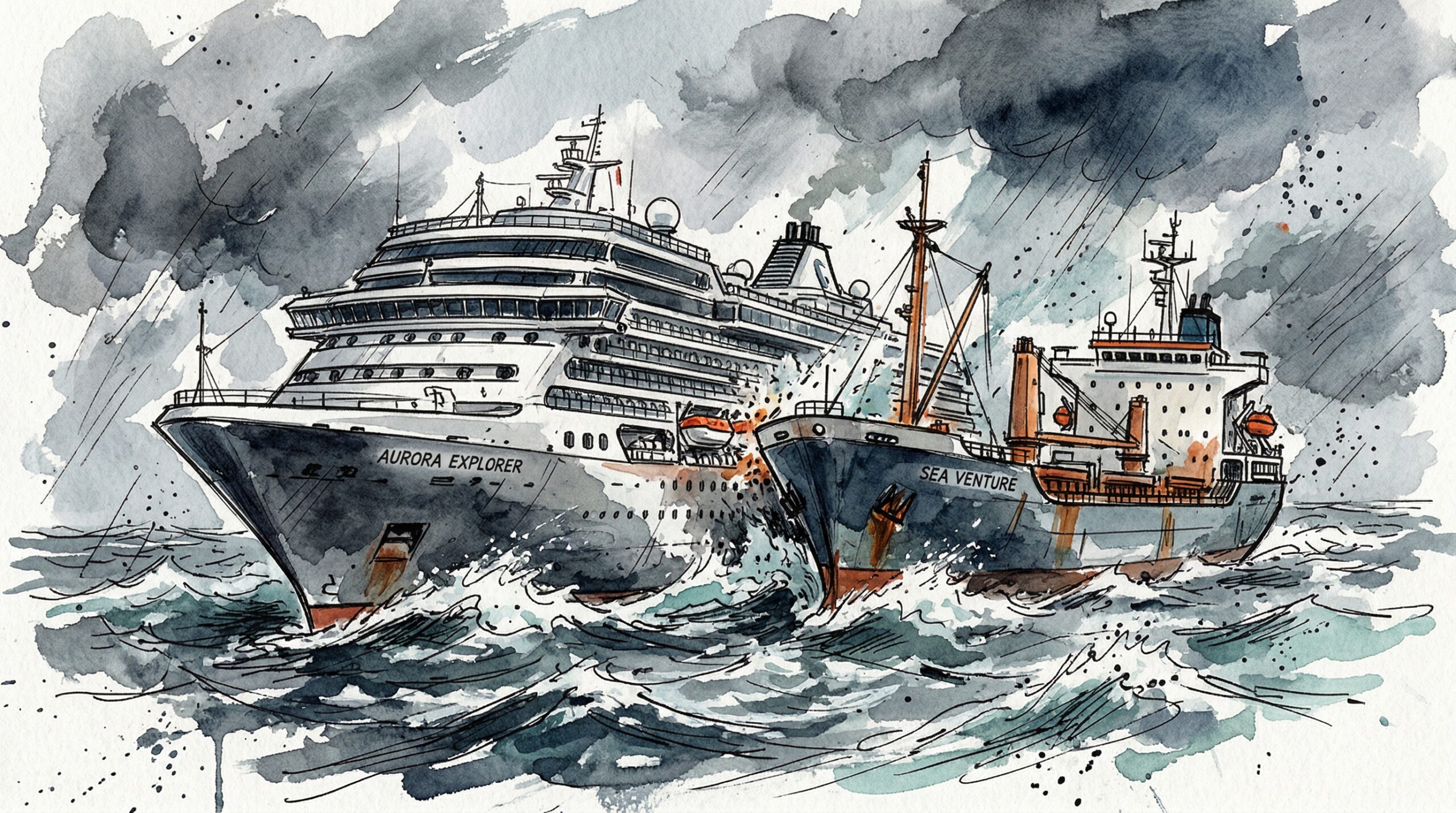

A cruise ship collided with another vessel in high winds. Let that sentence sit for a moment. Two ships — enormous floating cities of steel — made contact in dangerous sea conditions, and we are all just casually learning about it via a headline between a Pillsbury crescent roll recipe and a story about Kevin Hart’s wax figure.
Tea TempLast updated: March 23, 2026
This is the kind of incident that reminds you that for all the infinity pools and bottomless mimosas, a cruise ship is still a massive vessel operating in an environment that genuinely does not care about your vacation plans.
Two Ships, One Very Bad Day
Here’s what we know: a cruise ship collided with another vessel while high winds were battering the area. High winds aren’t just “kind of breezy” — in nautical terms, that phrase covers conditions that make maneuvering a ship the size of a skyscraper an extremely stressful exercise in physics and prayer.
Ships of this scale don’t have brakes. They have engines, thrusters, and tugboats — none of which work instantaneously. When wind starts pushing a vessel sideways, you’re working with physics on a timeline that doesn’t care about your docking schedule. Or, apparently, about the other vessel in the vicinity.
What a Ship Collision Actually Means
Let’s not gloss over what “collision” implies here. This isn’t a fender bender in a parking garage. When ships collide, the potential consequences include hull breaches — meaning water where water is absolutely not supposed to be — structural damage, and injuries to anyone unfortunate enough to be in the wrong place at the wrong moment.
Cruise ships are built to take a beating, but they are not indestructible. A hull breach at the wrong point can flood compartments. Passengers and crew standing near railings, on decks, or simply walking through corridors when impact happens can be thrown off their feet. Heavy objects shift. Glass breaks. It is — to use the technical maritime term — a lot.
And if you’ve ever wondered how these ships stack up in terms of overall safety and maintenance history, our cruise ship rankings are a genuinely useful place to start.
High Winds: The Villain of This Story
The “high wind” detail isn’t incidental — it’s the whole context. Maritime incidents don’t happen in a vacuum (or calm seas). When conditions deteriorate, captains and port authorities face a tense calculation: push through, wait it out, or attempt a maneuver that the weather has other ideas about.
High winds can turn a routine docking or passage into a white-knuckle situation even for experienced crews. Add a second vessel to the equation — another ship also trying to navigate the same bad conditions — and the margin for error shrinks dramatically. This is the sea reminding the cruise industry, as it periodically does, who’s actually in charge.
What We Don’t Know Yet (And Why That’s Frustrating)
The details coming out of this incident are — how do we say this diplomatically — thin. We don’t yet have a confirmed ship name, a passenger injury count, or a clear picture of the damage. This is extremely normal in the immediate aftermath of a maritime incident, and also extremely annoying when you are trying to understand what actually happened.
Cruise lines are not historically famous for their forthcoming nature when incidents occur. Expect a very measured statement using phrases like “minor contact,” “no significant structural damage,” and “the safety of our guests and crew is our top priority” — the holy trinity of cruise PR crisis comms.
You can look up any ship’s report card on our ship database while we wait for more details to emerge.
What We Know
- What happened: A cruise ship collided with another vessel
- Conditions: High winds at time of impact
- Potential consequences: Hull breaches, structural damage, and passenger/crew injuries are all risks in ship collisions of this type
- Ship name: Not yet confirmed
- Location: Not yet confirmed
- Injuries: Not yet confirmed
- Status: Developing — details are still emerging
We’ll update this post as more information becomes available. In the meantime, this is your periodic reminder that the open ocean is a big, indifferent place — and maybe read those muster drill instructions when they hand them to you at embarkation. Just a thought.
Try our free cruise games & calculators
Explore real CDC inspection scores and outbreak data for every cruise ship.