

⏱️ 5 min read
Tea TempLast updated: September 13, 2026
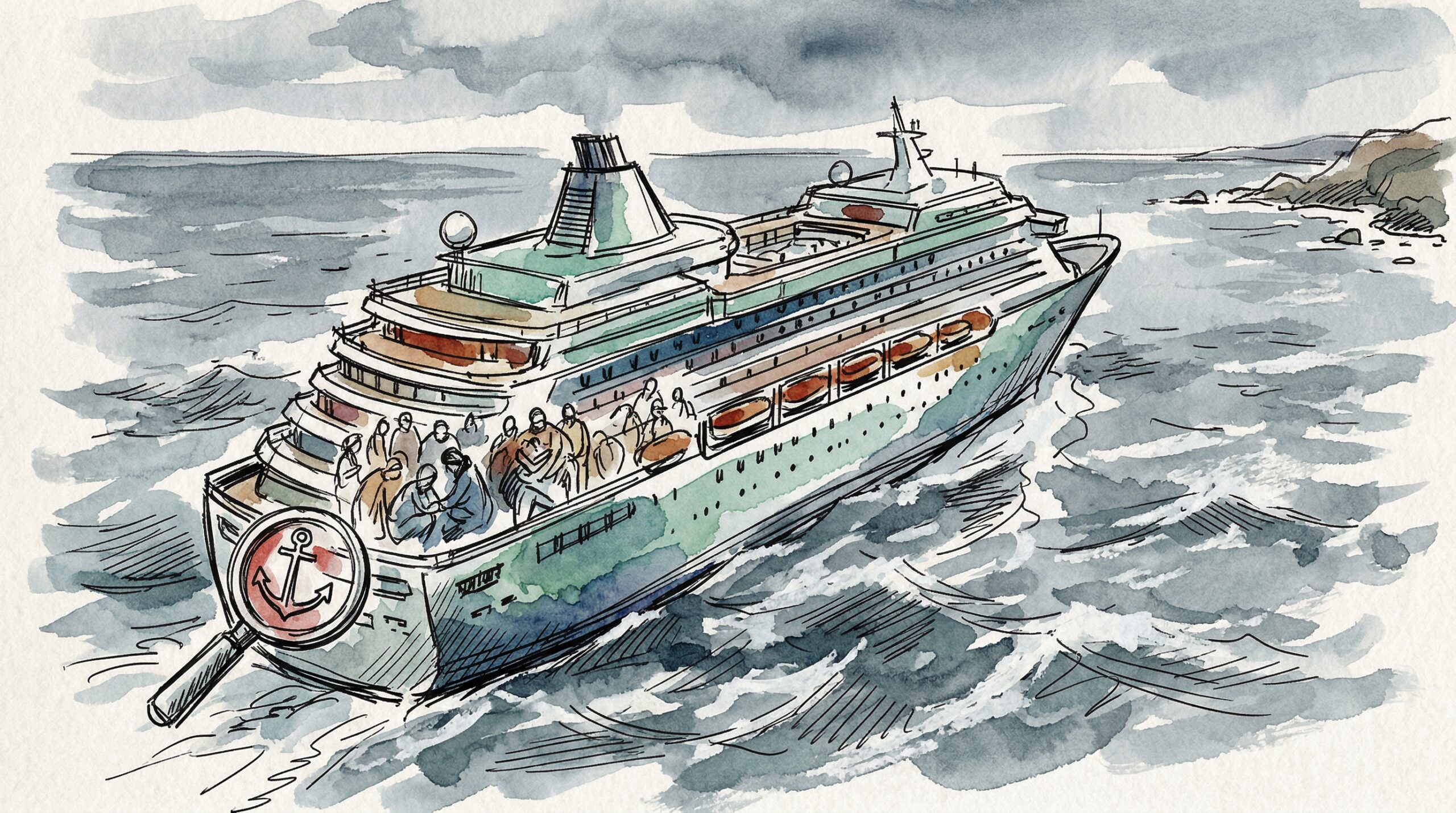
Nobody books a cruise expecting to spend it in their cabin with a trash can next to the bed. And yet, every year, thousands of cruise passengers experience exactly that — thanks to gastrointestinal illness outbreaks that the CDC tracks, reports, and publishes for anyone willing to look.
Most people aren’t willing to look. But we are. We read every single CDC cruise outbreak report so you don’t have to.
What the Outbreak Tracker Shows
Our Outbreak Tracker is a live feed of every CDC-reported gastrointestinal illness outbreak on cruise ships. For each outbreak, you’ll see:
- The ship and cruise line — which vessel, who operates it
- Voyage dates — when the outbreak occurred
- The agent — what caused it (usually norovirus, sometimes unknown)
- Passenger numbers — how many passengers got sick out of the total onboard, with percentages
- Crew numbers — crew illness counts and percentages
- Port of embarkation — where the voyage departed from
How to Use the Tracker
The tracker defaults to the current year. Use the year buttons to browse outbreak history going back to 2016 — that’s nearly a decade of data.
Each year gives you summary stats at the top: total outbreaks, total passengers ill, total crew ill, and how many cruise lines were affected. Below that, every outbreak is listed chronologically with full details.
At the bottom, you’ll find a breakdown showing which cruise lines had the most outbreaks that year. (Spoiler: it’s not always who you’d expect.)
When the CDC Reports an Outbreak
The CDC tracks outbreaks under their Vessel Sanitation Program. An outbreak gets reported when a significant number of passengers or crew develop gastrointestinal illness during a voyage. The ship’s medical staff reports it, the CDC investigates, and the results become public record.
The most common culprit? Norovirus. It’s wildly contagious, spreads through close contact and contaminated surfaces, and thrives in the enclosed environment of a cruise ship. It’s not the ship’s “fault” per se — norovirus outbreaks happen at schools, hospitals, and nursing homes too. But a cruise ship with 5,000 people sharing buffets, pools, and elevator buttons is basically a norovirus paradise.
What to Look For Before You Book
A single outbreak on a ship doesn’t mean much — outbreaks can happen to anyone. What you want to watch for:
- Repeat outbreaks on the same ship — one is bad luck. Three is a pattern. Check the ship’s full profile to see its outbreak timeline.
- High illness percentages — if 8% of passengers got sick vs. 2%, that’s a meaningful difference in how well the ship contained it.
- Cruise lines with disproportionate outbreak counts — some lines appear in the tracker more often than others. Our yearly breakdown makes this easy to spot.
Should You Worry?
Honestly? For most cruises, the risk is low. Millions of people cruise every year without getting sick. But “low risk” isn’t “no risk,” and it doesn’t hurt to check whether your specific ship has a history before you board.
Think of it like checking restaurant health ratings. You’ll probably be fine eating anywhere. But if a restaurant has three health code violations in the last year, maybe you pick the one next door.
Want the full picture on a specific ship? Look it up in our cruise ship database or check the most outbreak-prone ships ranking to see who leads the (very unfortunate) leaderboard.

Try our free cruise games & calculators
Explore real CDC inspection scores and outbreak data for every cruise ship.