
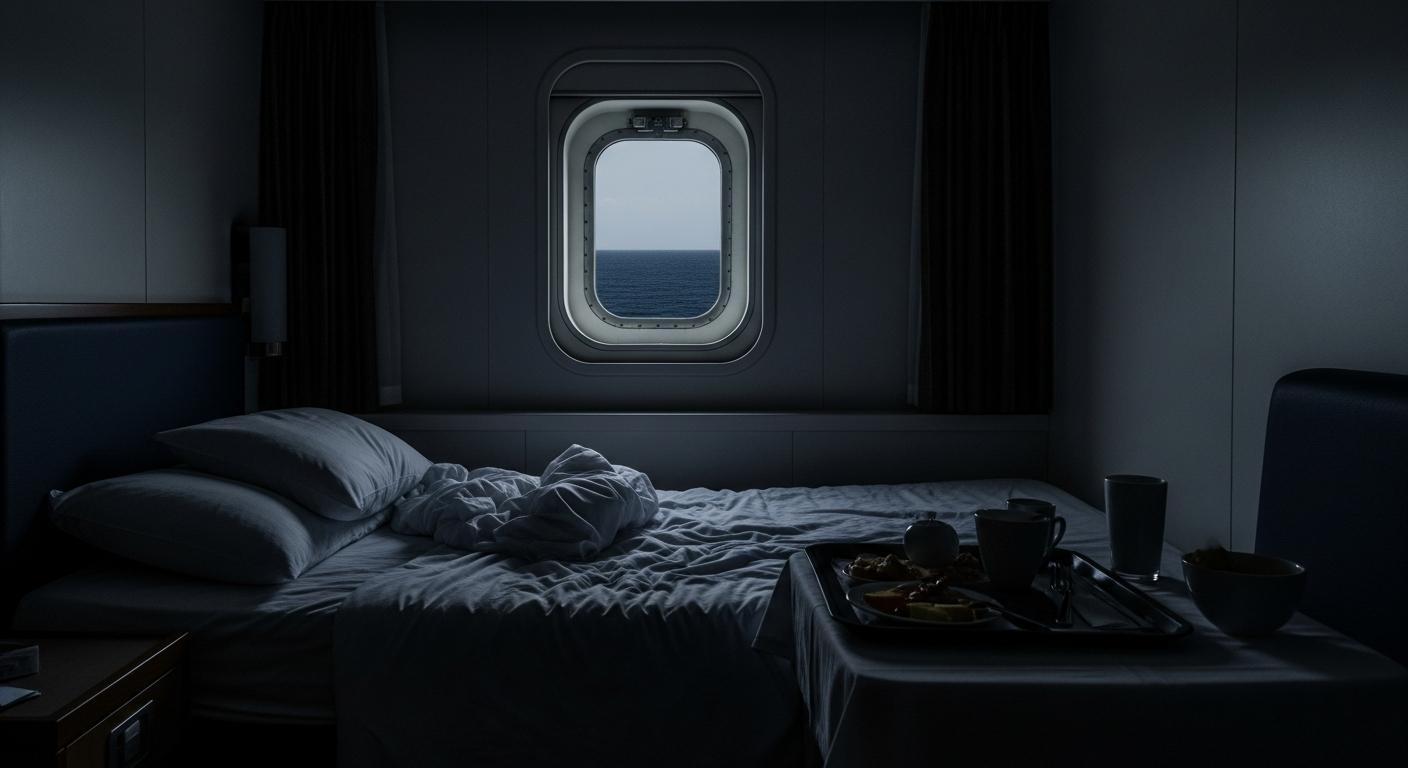

Not all cruise cabins are created equal—even within the same category and price point, location dramatically affects your experience. Avoid booking regret (and sleepless nights) by knowing which cabin locations consistently disappoint. Here’s what experienced cruisers avoid and why.
⏱️ 9 min read
Below or Adjacent to Nightclubs and Bars
The problem: Thumping bass reverberating through your walls or ceiling until 2am, every single night of your cruise.
Cruise ships stack entertainment venues vertically, often placing nightclubs, dance floors, and late-night bars on upper decks directly above cabin decks. The bass frequencies from dance music penetrate through multiple deck levels—what sounds like reasonable volume in the club becomes an inescapable thud-thud-thud when you’re trying to sleep two or three decks below.
Even if the music isn’t loud enough to keep you fully awake, the rhythmic bass pulse disturbs sleep quality in ways you’ll feel as fatigue the next day.
How to avoid this: Study deck plans carefully before booking. Identify all bars, nightclubs, and entertainment venues, then note what cabins sit directly below them. Avoid any cabin within two or three decks underneath nightlife areas. On older ships, this information may require research beyond the basic deck plan.
Above, Below, or Adjacent to the Main Theater
The problem: Sound from production shows vibrating through floors, ceilings, and walls during every performance.
Ship theaters typically span multiple decks vertically, with powerful sound systems designed to fill large spaces. Productions include amplified music, energetic dance numbers that literally shake the floor, audience applause, and dramatic effects. Cabins directly adjacent to theater spaces—above, below, or beside—hear muffled but persistent show noise during every performance.
Main shows often run 7:00pm and 9:00pm, meaning your cabin could be affected during dinner and again during the hours you might want to retire for the evening.
How to avoid this: Locate the theater on deck plans (usually in the forward section of the ship) and avoid cabins that share walls, floors, or ceilings with that space. This often means avoiding forward cabins on certain deck levels entirely.
Near the Anchor Mechanism (Forward Lower Decks)
The problem: Anchor chain deployment sounds like a freight train crashing through your cabin at 6am.
When ships anchor at tender ports, massive anchor chains deploy through the hull—typically at the very front (bow) of the vessel. Forward cabins on lower passenger decks sit closest to this mechanism. The noise sequence goes: CRASH-CLANG-CLANG-CLANG as hundreds of feet of heavy chain feed out. It’s startling, loud, impossible to sleep through, and often occurs at the earliest port arrival hours.
How to avoid this: Avoid forward cabins on the lowest two or three passenger decks. Cabin numbers can indicate position—the lowest numbers on a deck typically run farthest forward. Research specific deck plans for your ship to identify which cabins are positioned near the bow.
Directly Above the Engine Room
The problem: Constant low-frequency vibration and mechanical hum that runs 24 hours a day.
Ship engines operate continuously while at sea, producing vibration that transmits through the hull structure. Cabins positioned directly above engine spaces experience this vibration as a persistent low-frequency hum and subtle movement that some passengers barely notice while others find maddening. The effect compounds over multiple nights, potentially affecting sleep quality throughout a week-long cruise.
How to avoid this: Aft (rear) cabins on the lowest passenger decks typically sit closest to engine rooms and propulsion systems. Read cruise reviews mentioning specific cabin numbers with comments about “vibration” or “engine noise” to identify problem locations on specific ships.
Under the Pool Deck
The problem: Deck chair dragging, amplified music, splashing, and crowd noise directly overhead from early morning through evening.
Pool decks feature constant activity: metal furniture being dragged across deck surfaces (surprisingly loud from below), PA systems playing music and announcements, live bands during pool parties, and the general commotion of hundreds of people in active recreation. Cabins directly below hear dragging chairs, thumping footsteps, splashing, and amplified sound throughout daylight hours.
How to avoid this: Identify pool deck locations and avoid cabins on the deck immediately below. This typically means avoiding cabins directly under the Lido deck or main pool area—often the highest cabin deck is directly below outdoor recreation spaces.
Near Crew Areas and Service Corridors
The problem: Rolling carts, crew conversations, kitchen clatter, and service activity at unpredictable hours including middle of the night.
Crew service areas, galley elevators, and staff corridors see constant traffic serving passenger needs around the clock. Room service carts roll through at 3am. Crew members communicate while working early morning preparation. Galley operations create kitchen sounds. Cabins positioned near these service areas experience unpredictable noise throughout day and night.
How to avoid this: Examine deck plans for double doors, unmarked spaces, and areas adjacent to restaurants that indicate service corridors or galley access. Read cabin-specific reviews that mention “crew noise,” “cart noise,” or “hallway traffic” as indicators.
Connecting Door Cabins (When You’re Not Using the Connection)
The problem: Sound transmission through the connecting door means you hear your neighbors more clearly—including crying babies, loud conversations, and TV watching.
Connecting doors between cabins allow families to book adjacent rooms with internal access. These doors provide significantly less sound insulation than solid cabin walls. If you’re not traveling with people in the connecting cabin, you share that reduced sound barrier with complete strangers. Their conversations, television viewing, phone calls, and children carry through more distinctly than with standard wall separation.
How to avoid this: Request specifically for a cabin without connecting doors when booking, or verify cabin selection on deck plans. Ships mark connecting cabin pairs; avoiding these entirely eliminates the issue.
Obstructed View Balcony Cabins
The problem: Paying balcony cabin prices for a view of lifeboats, steel structures, or overhanging decks rather than open ocean.
Some balcony cabins have views partially or substantially blocked by ship equipment. Lifeboats hang outside the railing. Steel support structures interrupt sightlines. Overhanging decks create shadows and block upward views. You’re paying the premium for outdoor space but can’t actually enjoy unobstructed ocean views or watch port arrivals properly.
How to avoid this: Deck plans typically mark these as “obstructed,” “limited view,” or “partially blocked.” Cruise review sites and forums often include photos from specific cabin numbers showing exact obstructions. Verify before booking any balcony cabin at a lower-than-expected price point.
The Sweet Spot: Where to Book Instead
Optimal cabin location strategy: Midship position, mid-deck level, reasonably close to (but not immediately adjacent to) elevators, and away from the far ends of long corridors.
- Midship position: Less motion felt during rough weather—the ship pivots from the center, so the middle experiences least movement
- Mid-deck level: Above engine room vibration zones, below pool deck noise
- Near but not adjacent to elevators: Convenient access without constant ding-ding-ding and door opening sounds
- Away from stairwells: Less foot traffic noise from passengers using stairs
- Standard cabins rather than specialty locations: End cabins sometimes have issues; mid-corridor cabins are predictable
The Bottom Line
Fifteen minutes of deck plan research and review reading prevents seven nights of booking regret. Check cruise-specific review sites for cabin reports, study deck plans to identify noise sources above and below your options, verify view obstructions for balcony cabins, and don’t assume all cabins within the same price category deliver equivalent experiences. Location matters more than most first-time cruisers realize.
Had a cabin nightmare? Share your cautionary tale in the comments! Follow Ship Tea for more cruise planning wisdom and the sassiest commentary on the seven seas.

While you're here, try our free cruise tools:
Explore real CDC inspection scores and outbreak data for every cruise ship.