
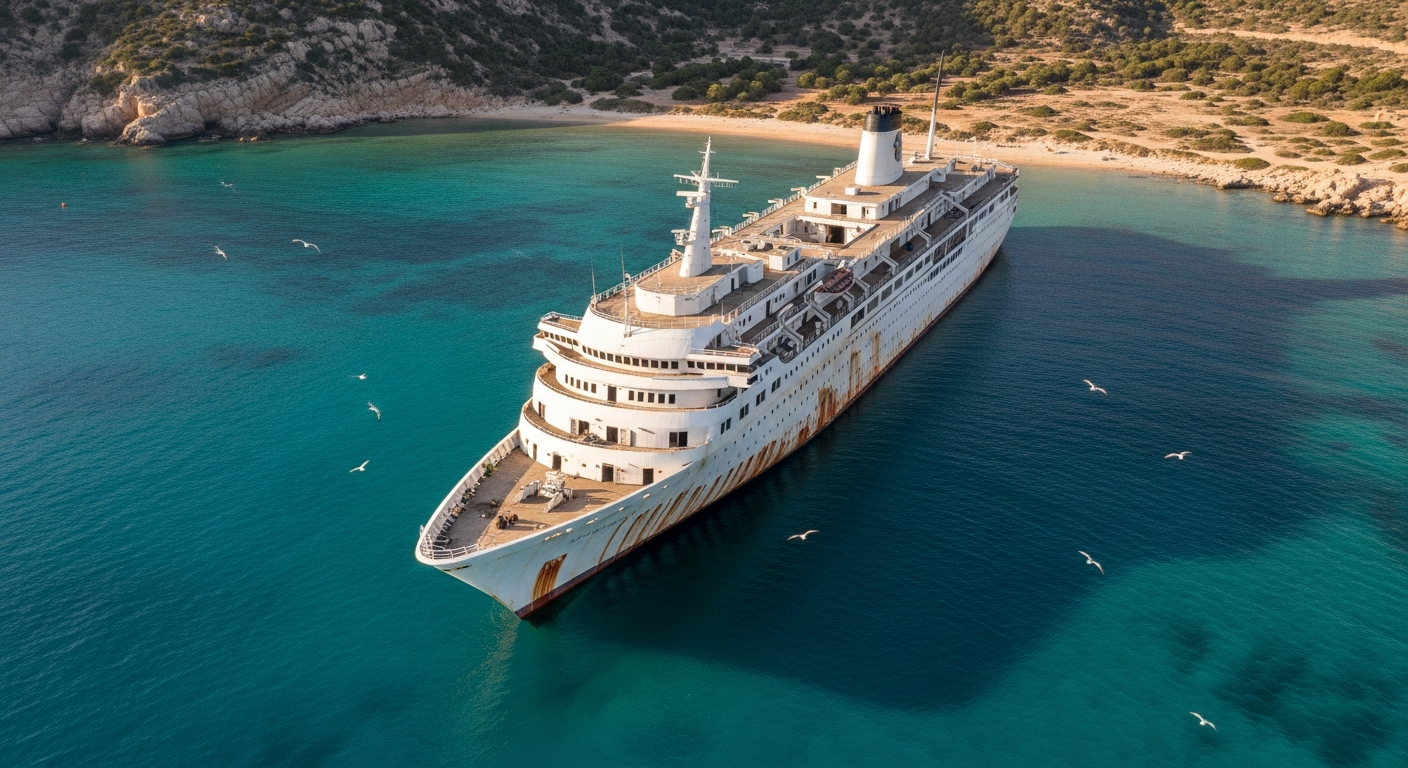

When a cruise ship reaches the end of its commercial life, it doesn’t simply vanish. The fate of retired vessels ranges from glamorous second careers to sobering journeys to distant scrapyards. Here’s what really happens when cruise ships sail their final voyages—and why the endings matter.
⏱️ 9 min read
The Life Expectancy of a Cruise Ship
Most cruise ships are designed for 25-30 years of active commercial service, though some vessels sail productively far longer with proper maintenance investment. The decision to retire a particular ship involves complex calculations comparing renovation costs against continued operation versus ordering newer, more efficient replacement vessels.
Key factors in retirement decisions include:
- Fuel efficiency: Older ships consume significantly more fuel than modern vessels, creating ongoing operational cost disadvantages
- Maintenance burden: Aging mechanical systems, electrical components, and hull structures require increasingly frequent and expensive repairs
- Passenger expectations: Dated amenities, cabin designs, and technology lose booking appeal compared to newer competitors
- Regulatory compliance: Environmental regulations continuously tighten, sometimes requiring expensive retrofits older ships can’t justify
- Brand positioning: Cruise lines balance fleet age against brand image—too many older ships can affect market perception
Option 1: Sale to Another Cruise Line
The most common fate for younger retired ships
Many cruise ships begin second (or third, or fourth) careers with different operators after their original owners retire them. A ship deemed too old for Royal Caribbean or Carnival might have decades of productive life remaining for a smaller cruise line serving different markets with different passenger expectations.
Ships frequently transfer to:
- Budget cruise lines seeking affordable fleet expansion without new-build costs
- Regional operators in Asia, South America, or smaller markets where passenger expectations differ
- Expedition cruise companies converting traditional cruise ships for adventure travel with structural modifications
- Startup cruise ventures looking to enter the market without massive new-ship investments
This “cascade” effect means a single ship might serve three, four, or even five different cruise lines over its full lifespan, each time moving to operators with progressively different price points and market expectations.
Option 2: Conversion to Non-Cruise Use
Creative second lives for retired vessels
Some retired cruise ships find entirely new purposes beyond passenger cruising:
- Floating hotels: Permanently moored ships serving as waterfront hotel accommodations, often in port cities seeking unusual tourism attractions
- Accommodation vessels: Temporary housing for workers at remote industrial sites, offshore platforms, or major construction projects
- Hospital ships: Converted for medical missions providing healthcare services in developing regions lacking shore infrastructure
- Refugee and emergency housing: Emergency accommodation during migration crises or natural disasters requiring rapid large-scale housing
- Floating restaurants and entertainment venues: Permanently docked spaces for dining, events, and entertainment in harbor locations
Notable examples include the former SS Rotterdam, now operating as a hotel and museum in the Netherlands, and the legendary Queen Mary, serving as a Long Beach, California hotel and tourist attraction since 1967.
Option 3: Ship Breaking (Scrapping)
The sobering reality for most retired vessels
When a cruise ship’s economic value as a sailing vessel drops below its value as scrap metal, it typically heads to a ship-breaking yard—most commonly located in India, Bangladesh, Pakistan, or Turkey where labor costs make the intensive dismantling process economically viable.
The ship-breaking process involves:
- The vessel sails (or is towed, if no longer seaworthy) to the breaking facility
- All reusable items are systematically removed: furniture, fixtures, electronics, artwork, lifeboats, safety equipment
- Hazardous materials (asbestos in older ships, heavy metals, fuel residues, refrigerants) are carefully processed according to environmental protocols
- The hull is systematically dismantled, cut into manageable sections by teams of workers
- Steel is sorted, processed, and recycled into new products—often construction materials
A single large cruise ship contains 20,000-50,000 tons of recyclable steel. The scrapping process, while economically necessary, has faced persistent criticism for environmental practices and labor conditions at some facilities—an ongoing industry concern.
Option 4: Preservation as Museum or Memorial
Rare but celebrated outcomes
A fortunate few historically significant ships escape scrapping through preservation efforts. Examples include:
- SS United States: The fastest ocean liner ever built currently sits in Philadelphia awaiting potential preservation or redevelopment—her fate remains uncertain after decades of deterioration
- Queen Mary: Successfully preserved as a hotel, museum, and event venue in Long Beach since 1967
- SS Rotterdam: Operating as a hotel, museum, and event space in Rotterdam, Netherlands
Preservation requires enormous ongoing investment that few entities can sustain. Maintaining a steel ship against relentless corrosion, keeping critical systems functional, meeting modern safety codes—the costs run into millions annually. Most preservation attempts ultimately fail financially despite passionate advocacy.
Recent Notable Retirements
The COVID-19 pandemic dramatically accelerated cruise ship retirements as the industry faced unprecedented financial pressure during extended operational shutdowns:
- Carnival Fantasy (2020): The first Fantasy-class ship, scrapped after 30 years of service
- Carnival Fascination (2020): Sent to Turkish scrapyard during pandemic pause
- Costa Victoria (2021): Scrapped in Italy
- Multiple Carnival and Royal Caribbean vessels: Early retirement during COVID-19 industry shutdown as lines used the pause to accelerate fleet renewal
The 2020-2021 period saw more cruise ship retirements than any comparable period in industry history, as cruise lines seized the operational shutdown as an opportunity to retire aging tonnage they might have operated several more years under normal circumstances.
Why Ships Don’t Simply Become Artificial Reefs
Many people suggest sinking retired ships to create artificial reef habitats—it sounds environmentally beneficial, but reality is more complicated:
- Ships contain numerous hazardous materials that must be completely removed before any reef sinking
- Proper preparation for reef creation costs often exceeds the ship’s remaining value
- Environmental regulations governing intentional sinking are complex and location-specific
- Only purpose-designed vessels—thoroughly cleaned and specifically prepared for reef programs—typically become artificial reefs
The Emotional Side of Ship Retirement
For crew members who spent years of their lives working aboard a particular vessel, ship retirement carries genuine grief. Ships develop personalities. Crew form attachments. Watching a vessel that represented home and livelihood heading to a scrapyard genuinely hurts.
For passengers with significant memories—honeymoon cruises, family milestone celebrations, anniversary voyages—watching beloved ships head to their end stings unexpectedly. Cruise lines occasionally host “final voyage” sailings that sell out immediately with fans wanting one last experience before a ship’s retirement.
The Cycle Continues
Every cruise ship eventually sails its final voyage. Most become scrap metal recycled into construction materials, automotive parts, or new ships. A lucky few find second careers as hotels, museums, or accommodation vessels. The rarest survive as preserved memorials to their eras.
Meanwhile, new ships launch constantly to replace the retired—each generation larger, more efficient, more technologically advanced than its predecessors. The cycle continues, the fleet evolves, and the retired vessels quietly fade from service while new floating cities take their places on the world’s oceans.
Follow Ship Tea for more behind-the-scenes cruise content and the sassiest commentary on the seven seas.
While you're here, try our free cruise tools:
Explore real CDC inspection scores and outbreak data for every cruise ship.