
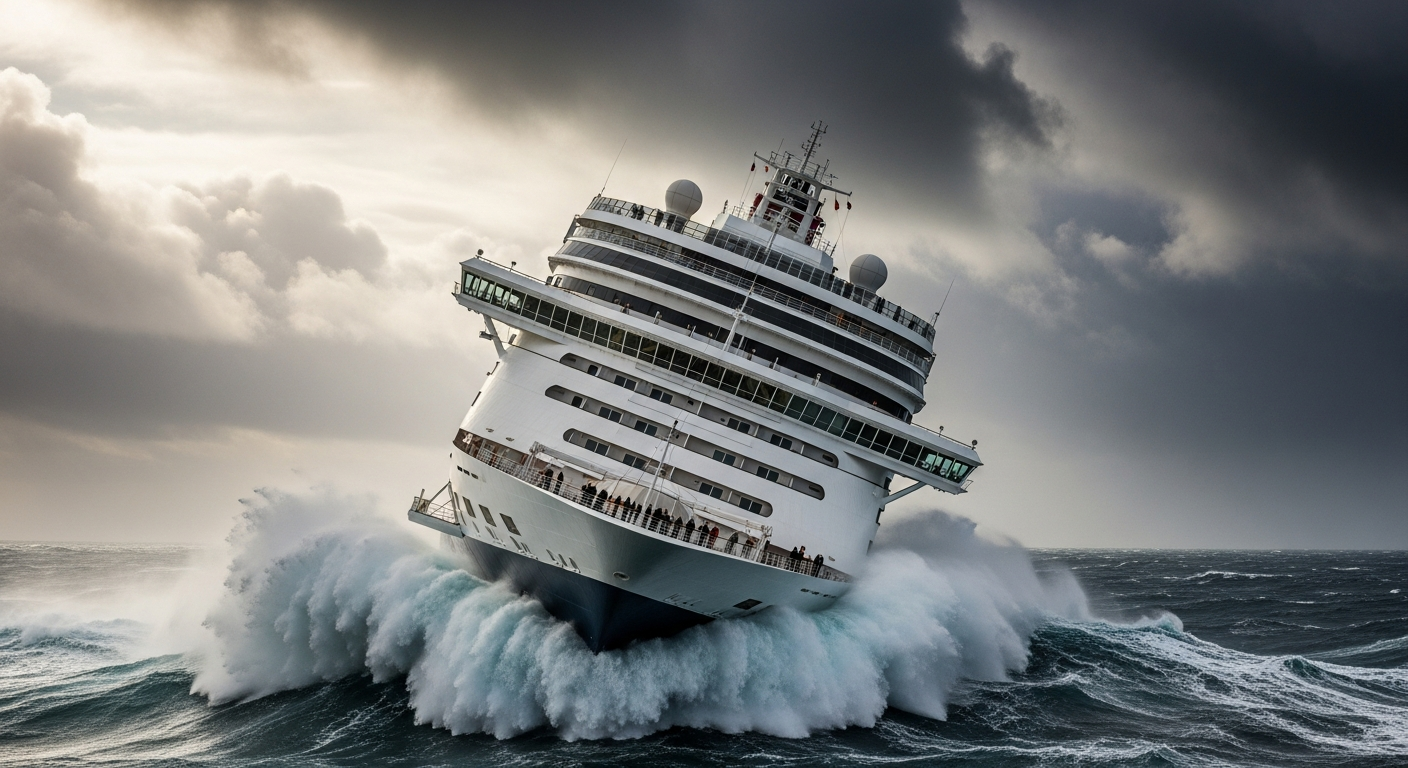

Okay, buckle up buttercups, because today we’re talking about a cruise incident that sounds like something ripped straight from a disaster movie script – except, you know, it actually happened. Imagine this: you’re out at sea, maybe sipping a piña colada (or, more likely, a cup of tea if you’re on this particular vessel), and then BAM. The ship loses power. In *heavy weather*. The result? Over 100 injuries and, tragically, one fatality. Let that sink in for a second.
When the Lights Go Out (and the Ship Goes Wild)
The vessel in question is the Spirit of Discovery. Now, the name itself conjures up images of serene voyages to exotic locales, perhaps a gentle sway as you glide over calm waters. But on this particular journey, the “discovery” was less about hidden coves and more about the terrifying reality of a ship without control. The official report from GOV.UK is stark: “Loss of propulsion in heavy weather.” Read that again. Not just ‘a bit of a wobble,’ not ‘some choppy seas,’ but *heavy weather* – the kind that makes even seasoned sailors a little queasy – and suddenly, your floating hotel becomes a very large, very expensive, very vulnerable cork in a washing machine.
Losing propulsion means the engines quit. The ship can’t steer, can’t maintain its position, can’t fight the waves. It’s at the mercy of the ocean. And if you’ve ever been on a cruise when the weather turns sour, you know how quickly things can go from charmingly dramatic to genuinely frightening. Now picture that, but with no power to steady the ship. Chaos, pure and simple, is the only word that comes to mind. We often talk about the report card for any ship, but sometimes, even the best engineering meets its match.
Over 100 Injuries? That’s Not a “Sprained Ankle” Situation
The sheer scale of the injuries reported is what really drives home the severity of this incident: “over 100 injuries to passengers and crew.” This isn’t just a few bumps and bruises. This is people being thrown across rooms, furniture becoming projectiles, unexpected and violent impacts. We’re talking broken bones, concussions, lacerations – the kind of injuries that require serious medical attention, not just a band-aid from the onboard clinic. Imagine the scene: frantic calls for help, the ship’s medical team overwhelmed, crew members trying to secure everything while also dealing with their own injuries or the panic of others. It’s a terrifying thought, especially when you consider that many passengers are older and more susceptible to severe injury from a fall.
It also makes you wonder about the safety protocols in place for such extreme conditions. Were passengers advised to stay in their cabins? Was everything secured? Or did the loss of propulsion happen so suddenly that there was no time to prepare? This is where the “critical safety failure” mentioned by GOV.UK really hits home. It’s not just an act of nature; it’s about how the ship responded – or couldn’t respond – to it.
A Tragic Loss: One Fatality Amidst the Chaos
And then there’s the most devastating detail: one fatality. Amidst the chaos of a ship losing control in a storm, someone lost their life. It’s a stark, heartbreaking reminder that even on what’s supposed to be a relaxing vacation, serious risks can materialize. Every injury is significant, but a death changes everything. It elevates the incident from a harrowing experience to an absolute tragedy. Our thoughts, of course, go out to the person’s family and loved ones.
This isn’t just a number; it’s a life cut short, and it underscores the immense responsibility cruise lines have to ensure the safety of everyone on board. It makes you think about everything from the ship’s maintenance to the training of its crew – not just for customer service, but for genuine emergencies. We often ponder how well crew members are treated, but their safety during an incident like this is paramount too.
“Critical Safety Failure”: The Official Verdict
The GOV.UK statement doesn’t pull any punches, calling this a “critical safety failure during adverse conditions.” That’s a pretty damning assessment from an official source. It’s not just bad luck; it implies a systemic issue or a breakdown in established safety measures. Was it a mechanical failure that could have been prevented? Was the ship in an area it shouldn’t have been given the weather forecast? These are the questions that will undoubtedly be explored in depth by investigators.
For us cruise enthusiasts, this incident serves as a sobering reminder that while cruising is generally very safe, things can and do go wrong. It highlights the importance of robust safety protocols, vigilant maintenance, and expert crew training. It also makes you wonder about the various cruise ship rankings – are they just about cleanliness and amenities, or do they truly reflect a ship’s ability to handle the unexpected?
While we love the magic of the open sea, incidents like the one involving the Spirit of Discovery remind us that the ocean is a powerful, unpredictable force, and our ships, no matter how grand, are ultimately at its mercy.
What We Know
- Vessel: Spirit of Discovery
- What Happened: Lost propulsion in heavy weather
- Outcome: Over 100 injuries to passengers and crew, one fatality
- Official Statement: Highlights a critical safety failure during adverse conditions (Source: GOV.UK)
While you're here, try our free cruise tools:
Explore real CDC inspection scores and outbreak data for every cruise ship.