
Embarkation day is supposed to be the easy part. Show up, board the ship, grab a drink, enjoy the pool. Nobody expects to hear “Code Echo” blaring over the speakers.
Last updated: April 26, 2026
⏱️ 7 min read
When the Wind Came for Norwegian Prima
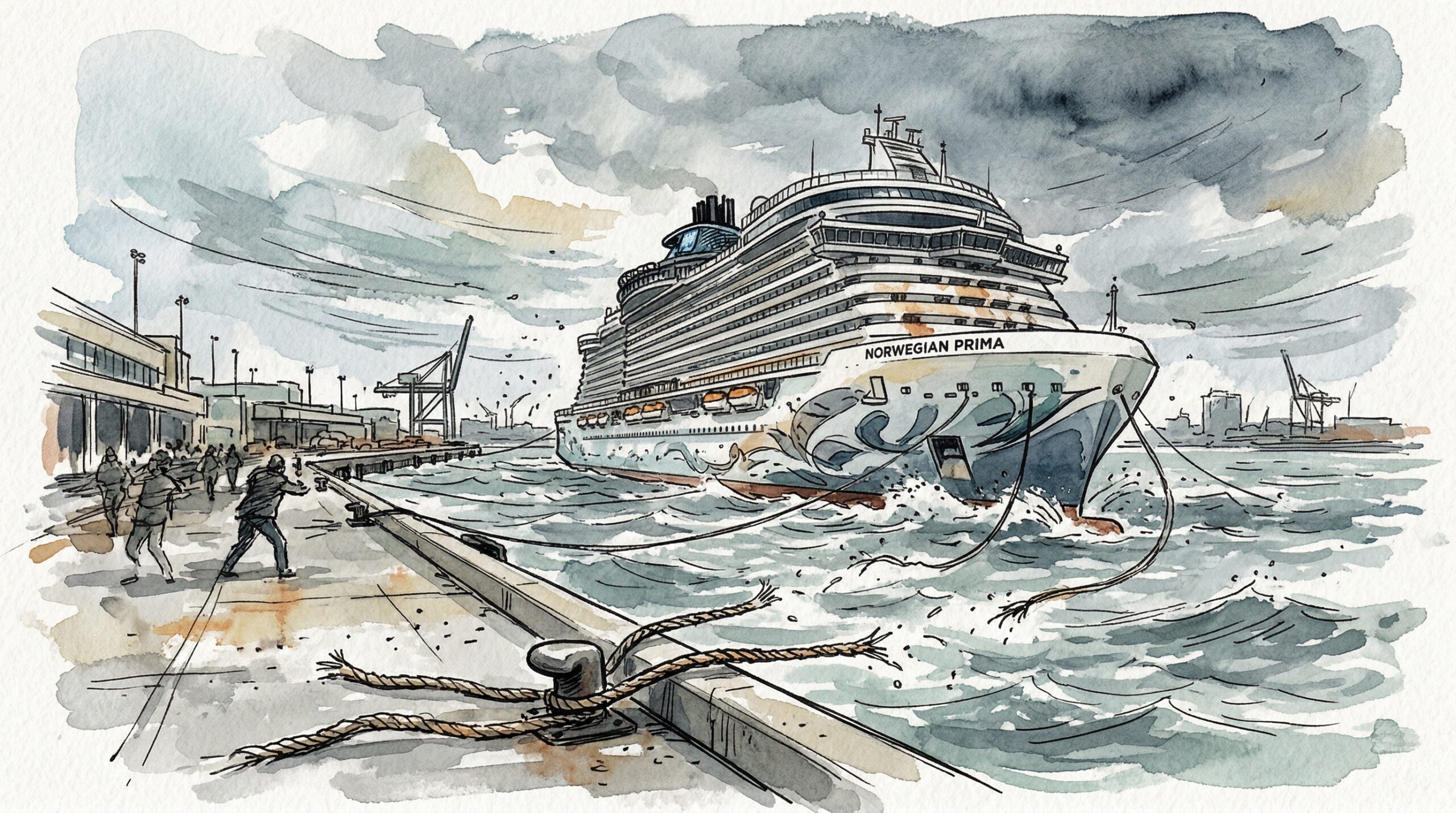
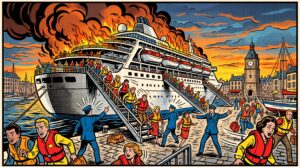
Passengers in the process of boarding Norwegian Cruise Line’s Norwegian Prima at Port Canaveral on January 18, 2026, experienced something no one puts on their pre-cruise checklist: their ship decided to leave without permission.
According to Cruise Hive, sudden wind gusts clocked at up to 48 miles per hour tore through Port Canaveral, generating enough force to snap the mooring lines holding the 143,535-gross-ton Norwegian Prima in place at Cruise Terminal 5.
Let that number settle in: 48 mph gusts. Strong enough to snap heavy-duty nautical ropes designed to hold a ship weighing over 143,000 tons against a dock. When Mother Nature decides to flex, even the biggest ships become her toys.
The moment the lines parted, passengers and crew heard the announcement no one wants to hear during what should be a routine boarding process: “Code Echo!”
What Code Echo Actually Means
For those unfamiliar with shipboard emergency codes, “Code Echo” is the standard alert used when a vessel experiences unintended movement or drift from its berth. It’s the maritime equivalent of your car rolling out of a parking space—except your car doesn’t weigh 143,000 tons and isn’t carrying thousands of people.
According to CruiseMapper, several mooring ropes parted under the wind stress. The ship began drifting away from the pier—slowly, but with unstoppable momentum given the forces involved.
For passengers mid-boarding, the situation was disorienting and alarming. You’re walking through the terminal, cruise documents in hand, vacation energy at maximum—and suddenly the ship you’re about to board is moving away from the dock on its own.
Tugboats to the Rescue
Port Canaveral’s tugboat operators earned their paychecks on January 18. According to Crew Center, two tugboats were promptly dispatched and positioned alongside the drifting Norwegian Prima to stabilize her movement. Working together, the tugs guided the massive vessel back alongside the terminal in a controlled manner while crew members worked to secure new mooring lines.
The entire incident was resolved without injuries—a testament to both the port’s emergency response capability and the crew’s training for exactly this type of scenario. Norwegian Prima remained at the terminal, completed her embarkation process, and departed on schedule at 6:00 PM for her planned 7-night Caribbean itinerary.
Crisis averted. Vacation saved. Underwear potentially changed.
A Familiar Pattern: Ships Breaking Free
If this story sounds familiar, it should. Norwegian Prima’s dock escape is strikingly similar to what happened with Norwegian Epic in Sicily during 2025, when that ship also broke free from its moorings during high winds, knocking passengers into the harbor.
And it’s not just Norwegian Cruise Line ships. Just days before the Prima incident, on January 6, 2026, two expedition cruise ships collided in Ushuaia, Argentina, after one broke free from its moorings during high winds. The pattern is consistent: unexpected wind gusts exceeding design parameters for mooring systems cause lines to snap, and ships drift.
The question isn’t whether it will happen again—it’s where and when. And whether the response will be as swift and injury-free as Port Canaveral’s.
Why Ships Break Free (The Engineering Reality)
Mooring systems are engineered for specific wind and current loads. Standard mooring configurations account for typical weather patterns at each port, but extreme weather events can exceed these design parameters. When wind gusts hit suddenly—going from 15 mph to 48 mph in minutes, as happened at Port Canaveral—the dynamic loading on mooring lines spikes dramatically.
Several factors contribute to these incidents:
- Ship size: Modern cruise ships present enormous wind profiles. Norwegian Prima’s high sides act like sails, catching wind force across thousands of square feet of surface area
- Sudden gusts: Sustained winds are manageable; sudden gusts create shock loads that exceed what ropes can absorb
- Port infrastructure: Older port facilities may not have bollard systems designed for the largest modern cruise ships
- Climate patterns: Changing weather patterns may be increasing the frequency and intensity of sudden wind events at coastal ports
What This Means for Passengers
Incidents like Norwegian Prima’s dock escape are alarming but rarely dangerous when port emergency systems function properly. Here’s what passengers should know:
- Crew training covers this scenario: Emergency drift procedures are standard training for all cruise ship officers
- Port tugboats exist for this reason: Major cruise ports maintain tugboat coverage specifically to assist ships in emergencies
- Code Echo doesn’t mean panic: It means the crew is responding to movement and taking control of the situation
- Embarkation delays resolve: Even after incidents like this, ships typically depart on schedule once secured
The biggest risk isn’t to passengers already aboard—it’s to those on the pier or gangway during the initial movement, which is why ports maintain safety perimeters and crew monitor conditions constantly.
Norwegian Cruise Line’s Response
NCL confirmed the incident occurred due to sudden high winds and that no injuries were reported. The ship departed on schedule for its Caribbean itinerary, and all subsequent port calls proceeded as planned.
The relatively smooth resolution reflects both the crew’s emergency training and Port Canaveral’s infrastructure investment in supporting the massive cruise ships that call the port home. But every incident like this reinforces the reality that cruise ships—for all their size and engineering—remain subject to the forces of nature.
The Ship Tea Take
Norwegian Prima’s dock escape lasted minutes, caused no injuries, and didn’t delay the cruise. In the grand scheme of cruise incidents, it’s a minor event with a good outcome. But the recurring pattern of ships breaking free from moorings across the industry deserves attention.
As ships get bigger, their wind profiles grow larger, and the forces required to hold them in place increase proportionally. Port infrastructure and mooring systems need to keep pace with ship size evolution. Because the next 48 mph gust might not resolve as smoothly.
Related Reading
- Norwegian Epic Breaks Free From Dock in Sicily, Knocks Passengers Into Harbor
- Why Norwegian Cruise Line Is Losing Its Loyal Fans
- Hurricane Season Cruise Guide: How to Protect Your Trip
Follow Ship Tea for breaking cruise news and the sassiest commentary on the seven seas.
Try our free cruise games & calculators
Explore real CDC inspection scores and outbreak data for every cruise ship.