

Another day, another cruise incident. But this one? This one hits different, folks. It’s not about a missed port, or a buffet line brawl, or even a rogue wave. This is about a life — an electrical technician aboard P&O Cruises’ Arvia — tragically cut short inside an elevator shaft while doing his job.
Tea TempLast updated: March 23, 2026
On October 26, 2025, as the Arvia sailed from Southampton, England toward Tenerife in the Canary Islands, a crew member was crushed to death between an elevator car and the shaft wall. The UK’s Marine Accident Investigation Branch (MAIB) has since released interim findings, and what they describe is both horrifying and preventable. Let that sink in for a moment.
What Actually Happened on P&O Arvia
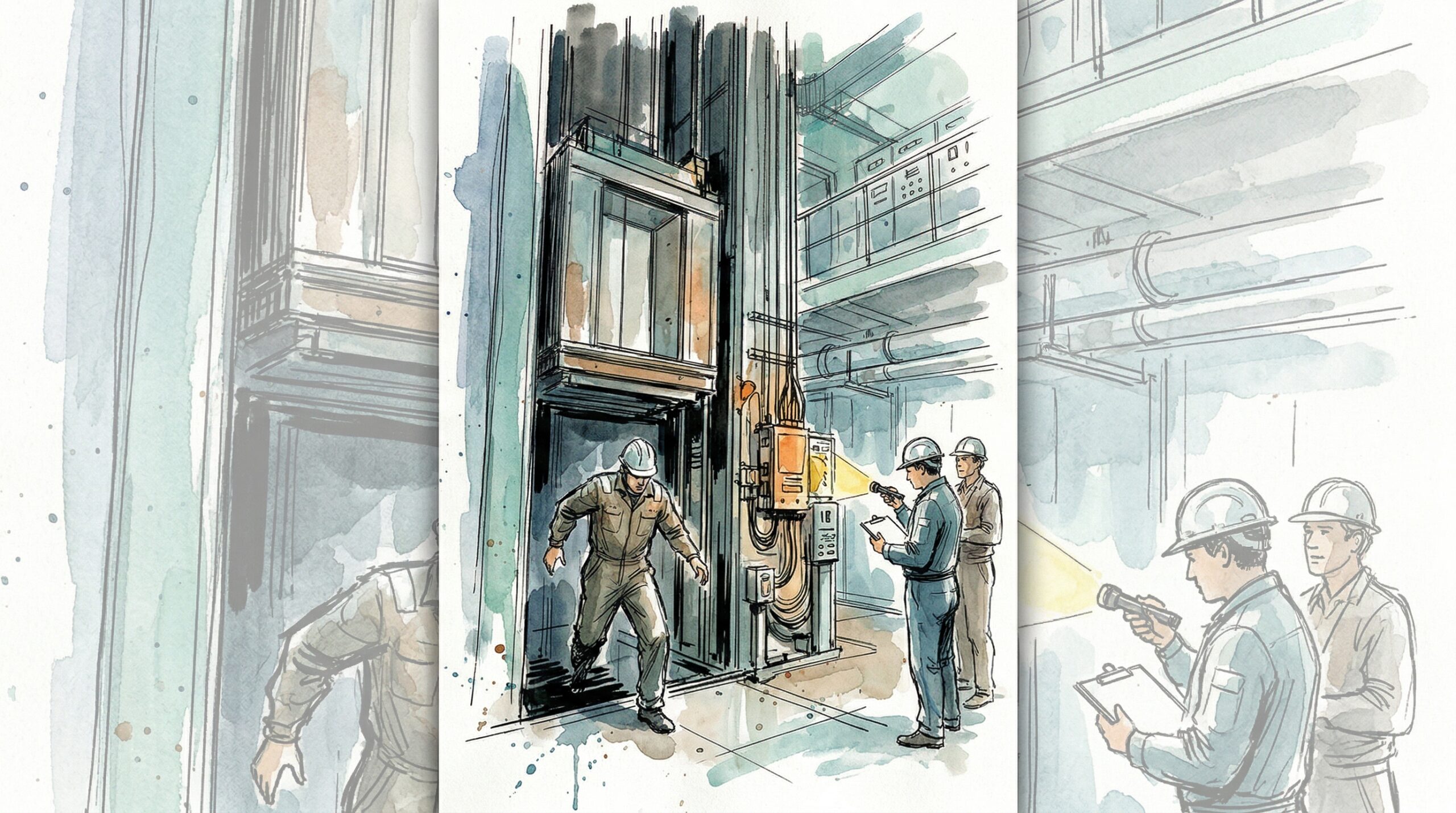
Here’s what the MAIB investigation found, and it reads like a nightmare chain of events. The Arvia — a relatively new ship, built in 2022 — had a passenger elevator that had recently been repaired. An electrical technician was tasked with testing it. So far, so routine.
The elevator car was stopped on Deck 11. The technician went to Deck 12 to open the shaft doors from there and inspect the top of the car — standard procedure for this kind of check. But the door release key didn’t work on Deck 12. There was a defect in the release mechanism. So he went up to Deck 14 to try opening the shaft doors from a higher level instead.
Here’s where it gets deadly. When the elevator car doors on Deck 11 and the shaft door on Deck 14 closed behind him, the safety interlocks re-engaged. The elevator’s control system saw a stored call signal — someone had pressed a button earlier — and with all the interlocks reading “clear,” the car began to move upward. The technician was in the shaft. The car crushed him against the shaft wall.
A medical emergency was declared at 6:02 a.m. He was pronounced dead at 6:07 a.m. Five minutes. That’s all it took from alarm to confirmation that this man was gone.
The Defect That Started It All
Let’s talk about that Deck 12 door release key, because it’s the linchpin of this entire tragedy. The MAIB’s interim findings identified a defect in the release mechanism for the Deck 12 elevator shaft doors. If that key had worked as designed, the technician would have accessed the top of the car from Deck 12 — one deck above where the car was stopped on Deck 11. He wouldn’t have needed to go to Deck 14. He wouldn’t have been in the path of the car when it moved.
A single faulty door release. On a ship built just three years earlier. That’s what it came down to. If you want to see how P&O’s ships stack up on safety inspections more broadly, you can look up any ship’s report card in our database.
The Unseen Heroes, The Unspoken Dangers
Think about it. We rely on these elevators constantly, ferrying us from the Lido deck to our cabins, from the main dining room to the theater. They’re just… there. We don’t think about the intricate machinery, the maintenance, the dozens of moving parts that could, in an instant, become incredibly dangerous. And we certainly don’t think about the crew members who maintain them, repair them, and literally climb into elevator shafts to keep them running.
This wasn’t some abstract “mechanical failure.” This was a trained electrical technician, following procedure, who died because a door release key was defective and the elevator’s safety interlocks couldn’t account for a human being inside the shaft once the doors closed. It’s a stark reminder that while we’re sipping daiquiris by the pool, there are thousands of dedicated individuals working tirelessly — sometimes in genuinely life-threatening conditions — to ensure our experience is seamless. And it’s one we should all be paying attention to, especially when we consider the overall crew treatment rankings across the industry.
The Aftermath: Diversion to Spain
After the technician was pronounced dead, the Arvia diverted to A Coruña, Spain, where local emergency services boarded the vessel to recover the body. The MAIB launched its investigation, and the interim findings paint a clear picture: this was a systems failure as much as a tragic accident.
The key question the investigation raises — and the one P&O Cruises needs to answer — is how a recently repaired elevator had a defective door release mechanism that went undetected. Was the defect introduced during the repair? Was it missed during post-repair testing? On a ship barely three years old, what does this say about maintenance quality control?
Beyond the Glitz: Where Safety Meets Reality
When you’re packing for your next cruise, you’re probably thinking about swimsuits and sunscreen, not elevator shaft interlocks. But every now and then, an event like this rips through the carefully constructed illusion of effortless luxury. It forces us to confront the reality of these floating cities — that they are, at their core, working environments with all the inherent risks that come with operating massive machinery at sea.
The Arvia is a P&O Cruises vessel — part of the Carnival Corporation family — and the existence of this incident demands scrutiny far beyond one ship. Are safety protocols for elevator maintenance rigorous enough across the fleet? Are door release mechanisms being tested after every repair? Are crew members trained for what to do when a key mechanism fails — including, crucially, ensuring the elevator can’t move while someone is in the shaft? These are the questions that need answers, not just for the sake of the crew, but for everyone on board.
What We Know
- Ship: P&O Arvia (built 2022)
- Date: October 26, 2025
- Location: En route from Southampton, England to Tenerife, Canary Islands
- What Happened: An electrical technician was testing a recently repaired passenger elevator. The car was stopped on Deck 11 while he attempted to access the shaft from above. A defective door release key on Deck 12 forced him to go to Deck 14. When the shaft doors closed, safety interlocks re-engaged, a stored call signal triggered the elevator to move upward, and the technician was crushed between the car and the shaft wall.
- Timeline: Medical emergency declared at 6:02 a.m.; crew member pronounced dead at 6:07 a.m.
- Diversion: Ship diverted to A Coruña, Spain, where local emergency services recovered the body.
- Investigation: UK Marine Accident Investigation Branch (MAIB) released interim findings identifying a defect in the Deck 12 elevator shaft door release mechanism and the re-engagement of safety interlocks as key factors.
- Injuries: One fatality (crew member — electrical technician)
Try our free cruise games & calculators
Explore real CDC inspection scores and outbreak data for every cruise ship.