
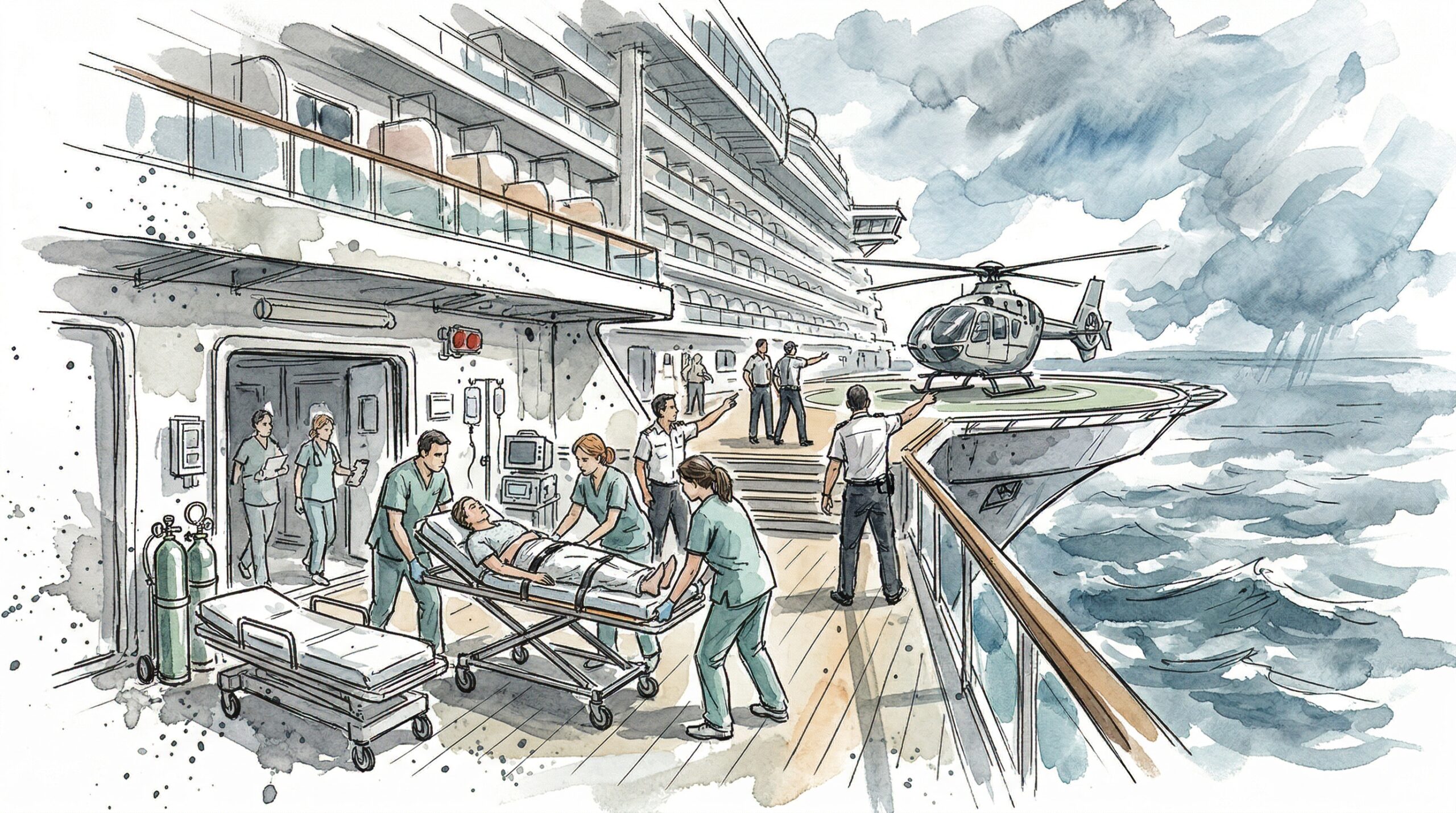

Medical emergencies at sea represent every cruiser’s nightmare scenario. What actually happens when someone gets seriously sick or injured thousands of miles from the nearest hospital? Here’s the inside look at cruise ship medical capabilities, the costs that might shock you, and what every cruiser should know before sailing.
Last updated: April 26, 2026
⏱️ 9 min read
The Cruise Ship Medical Center: More Than First Aid
Every major cruise ship operates an onboard medical facility staffed by licensed physicians and nurses trained in emergency medicine. These aren’t glorified first-aid stations with bandages and aspirin—modern cruise ship medical centers have capabilities rivaling well-equipped urgent care clinics:
- X-ray machines for diagnostic imaging
- EKG monitors and cardiac monitoring equipment
- Laboratory facilities for bloodwork and basic diagnostic testing
- Pharmacy stocked with prescription medications
- Minor surgical capabilities for procedures that can’t wait
- ICU-level monitoring equipment for critical stabilization
- Telemedicine connections to shore-based specialists for consultation
- Defibrillators positioned throughout the ship
Staff typically includes at least one licensed physician (often with emergency medicine or internal medicine background) and two to three registered nurses with emergency training. Larger ships may employ additional medical personnel.
What the Ship’s Medical Team CAN Handle
Cruise ship medical teams are equipped and trained to manage most common medical situations that arise during voyages:
- Minor injuries: Cuts requiring sutures, sprains, minor fractures, burns, abrasions
- Common illnesses: Norovirus treatment and hydration, respiratory infections, ear infections, urinary tract infections
- Emergency stabilization: Heart attack initial treatment, stroke response, severe allergic reactions, diabetic emergencies
- Chronic condition management: Diabetes complications, blood pressure issues, medication problems
- Severe motion sickness: When over-the-counter remedies fail, IV fluids and prescription anti-nausea medications
- Dental emergencies: Basic pain management and temporary fixes until shore-based care
What Requires Medical Evacuation
Some medical situations exceed shipboard capabilities and require evacuation to land-based hospitals:
- Major trauma requiring surgical intervention
- Complicated heart attacks or strokes needing specialized intervention
- Complicated childbirth situations (cruise lines generally don’t accept passengers beyond 24 weeks pregnant)
- Severe burns covering large body areas
- Conditions requiring advanced imaging (MRI, CT scans)
- Psychiatric emergencies requiring specialized psychiatric care
- Any condition deteriorating despite shipboard treatment
Medical evacuation options depend entirely on location: helicopter evacuation when ships are within range of land-based helicopter services, Coast Guard assistance in US waters, or ship diversion to the nearest suitable port. In remote areas (mid-ocean transatlantic crossings, Antarctica expeditions, remote Pacific routes), evacuation options become extremely limited—the ship’s medical center becomes your only resource until reaching port.
The Cost Reality: Prepare to Be Shocked
Here’s the uncomfortable truth cruise lines don’t advertise prominently: shipboard medical care is expensive. There’s no insurance network. No in-network versus out-of-network distinction. No Medicare coverage while at sea. You’re paying out-of-pocket at the time of service, then seeking reimbursement from your insurance later.
Typical cruise ship medical costs:
- Basic physician consultation: $150-300
- Seasickness treatment (IV fluids, injection): $200-400
- X-ray: $200-400
- Laboratory blood tests: $100-300 per panel
- Prescription medications: Retail prices or higher
- IV fluid treatment (dehydration/norovirus): $200-500
- Emergency cardiac evaluation: $500-1,500
- Complex emergency stabilization: $2,000-5,000+
Medical evacuation costs can be staggering:
- Helicopter evacuation: $25,000-100,000+ depending on distance and complexity
- Coast Guard rescue operations: Often billed to the patient
- Air ambulance from foreign port to home country: $50,000-250,000+
- Hospital care in foreign countries: Highly variable, often requiring immediate payment
These numbers aren’t exaggerations designed to scare—they’re real costs that real passengers have faced. Your regular health insurance likely provides minimal or zero coverage outside the United States, and may not cover maritime medical care at all.
Travel Insurance: The Non-Negotiable Essential
Comprehensive travel insurance with robust medical coverage isn’t an optional add-on—it’s essential protection for any cruise vacation. Look for policies specifically including:
- Emergency medical coverage: $100,000 minimum (higher recommended for remote destinations like Alaska, Antarctica, or transatlantic crossings)
- Medical evacuation coverage: $250,000-500,000 (this is the category where costs can become catastrophic)
- Repatriation coverage: Transportation home after medical treatment if you can’t complete your itinerary
- Trip interruption: If medical evacuation ends your cruise early, coverage for getting home
- Pre-existing condition coverage: If you have chronic conditions, ensure they’re explicitly covered
Cost perspective: Comprehensive travel insurance typically runs 5-10% of your total cruise cost. A $3,000 cruise might cost $150-300 to insure properly. Compare that $300 insurance cost to a $75,000+ helicopter evacuation bill without coverage.
Before You Cruise: Medical Preparation
Smart preparation significantly reduces your risk of needing expensive shipboard medical care:
- See your physician before cruising if you have any chronic conditions, especially for first cruises or extended voyages
- Bring sufficient prescription medications for the entire cruise plus extras in case of travel delays
- Keep medications in original pharmacy bottles with prescription labels—especially important for controlled substances
- Carry a medical summary document listing all conditions, current medications, known allergies, and emergency contacts
- Know your blood type and have it documented in accessible records
- Bring copies of essential prescriptions (glasses, contact lenses, critical medications) in case replacements are needed
- Pack over-the-counter basics: Pain relievers, antidiarrheal medication, antihistamines, motion sickness remedies
Who Should Think Carefully About Cruising
Cruising isn’t necessarily appropriate for everyone from a medical perspective:
- Pregnant women beyond 24-28 weeks: Most cruise lines prohibit late-term pregnancy travel for safety reasons
- Recent heart surgery or cardiac events: Wait until your cardiologist specifically clears you for cruise travel
- Dialysis-dependent conditions: Limited shipboard dialysis availability makes cruising complicated
- Unstable chronic conditions: If you require frequent medical monitoring or immediate access to advanced care, cruise ships may not be appropriate
- Mobility limitations: Research specific ship accessibility before booking
This isn’t gatekeeping—it’s acknowledging that cruise ships are isolated environments with genuine medical limitations. Honest self-assessment protects you.
When to Visit the Ship’s Medical Center
Don’t “tough it out” if you experience:
- Chest pain or unusual shortness of breath
- Severe vomiting or diarrhea lasting more than 24 hours
- High fever that doesn’t respond to standard treatment
- Signs of infection from cuts, scrapes, or insect bites
- Severe sunburn with blistering
- Head injury, even if you initially feel fine
- Any symptoms that concern you
Early intervention usually means simpler, less expensive treatment than waiting until conditions deteriorate significantly.
The Bottom Line
Cruise ships are better equipped for medical emergencies than most passengers realize—they’re essentially floating urgent care clinics with capabilities that would have seemed remarkable a generation ago. But they’re not hospitals. The combination of capable shipboard care, comprehensive travel insurance, thoughtful pre-cruise medical preparation, and honest self-assessment about your health status ensures you’re covered for whatever happens at sea.
Follow Ship Tea for more cruise guides and the sassiest commentary on the seven seas.



Try our free cruise games & calculators
Explore real CDC inspection scores and outbreak data for every cruise ship.