
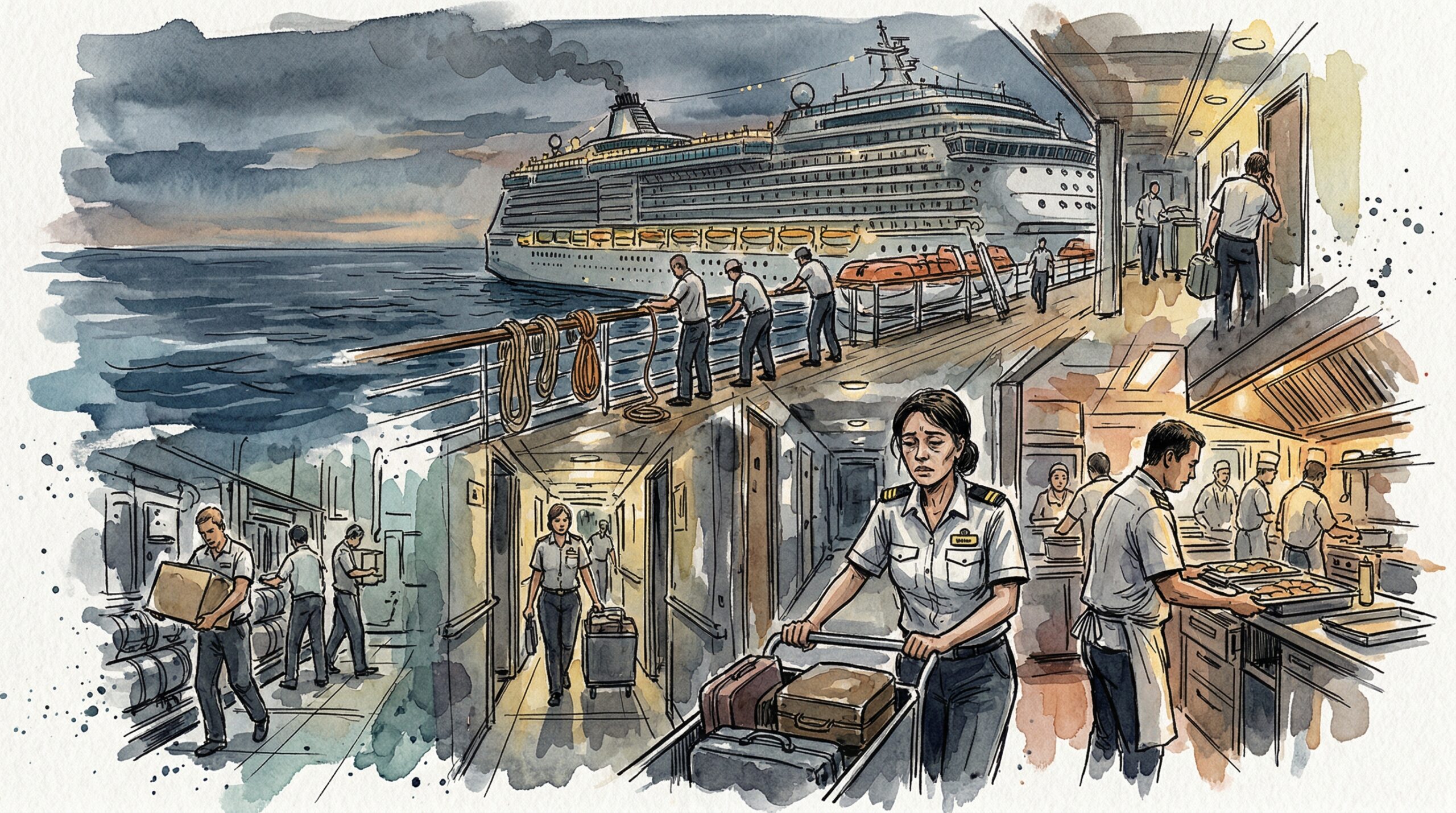

They serve your drinks with a smile. They clean your cabin while you’re at breakfast. They entertain you nightly in the theater. But what’s daily life actually like for the thousands of crew members who make your cruise vacation possible? Here’s the behind-the-scenes reality that passengers rarely see.
Last updated: April 26, 2026
⏱️ 9 min read
The Contract: What Crew Members Actually Sign Up For
Cruise ship crew typically work on contracts lasting 4-10 months, depending on their position and which cruise line employs them. During these contracts, crew members:
- Live aboard the ship full-time with no option to “go home” after a shift
- Work seven days a week with no traditional weekends off
- Share cramped cabins with 1-3 other crew members, usually in inside cabins below the waterline
- Follow strict rules about passenger areas, behavior, and fraternization policies
- Remain subject to ship rules and company policies 24 hours a day, even during off-duty hours
Between contracts, crew receive 2-4 months off, typically unpaid. The arrangement trades normal work-life balance for extended vacation periods and the ability to save money while living expenses (food, housing, utilities) are covered during working months.
A Typical Day: Service Crew Schedule
For cabin stewards, restaurant servers, and bartenders:
5:30-6:00 AM: Wake up in shared crew cabin (typically located below the passenger decks, no windows, cramped quarters)
6:30 AM: Breakfast in the crew mess (separate dining facility from passengers serving simpler meals)
7:00 AM: Begin first shift—cabin cleaning starts while passengers are at breakfast, servers prep dining rooms
12:00-12:30 PM: Split shift break begins (common in hospitality positions)—time for lunch, brief rest, or accessing crew recreation areas
2:30-3:00 PM: Return for second shift—afternoon service, turndown preparation, evening setup
10:00-11:00 PM: Shift typically ends (can extend later depending on venue assignment and passenger demands)
11:30 PM: Optional crew bar socializing (one of few spaces where crew can relax together) or rest
Total working hours: 10-14 hours daily, every single day for months straight. No weekends. No holidays off unless the ship doesn’t sail (rare).
A Typical Day: Entertainment Crew Schedule
For performers, musicians, and activities staff:
Entertainment crew often have more varied schedules with different challenges. Performers might rehearse new shows during morning hours, perform at 7:00 PM and 9:00 PM showings, then participate in late-night deck parties or activities ending after midnight.
Musicians play background sets during dinner hours, then headline shows at 10 PM, finishing work well after midnight. Activities staff run programming from morning yoga to midnight trivia competitions.
The hours may be less grueling than service positions, but entertainment crew are also expected to participate in sailaway celebrations, deck events, and sometimes passenger interactions that blur the line between work and personal time.
Living Conditions: The Reality Below Decks
Crew cabins: Small is an understatement. Imagine a college dormitory room divided among 2-4 adults with limited personal storage. Inside cabins without natural light. Shared bathrooms for some ranks. Minimal personal space and limited privacy for months at a time.
Crew mess: Buffet-style dining with food quality varying significantly by cruise line. Generally decent but not the passenger-quality meals served upstairs. Specific dining times must be observed—you can’t eat whenever you want like passengers can.
Crew recreation areas: Most ships have crew bars, recreation rooms, sometimes small pools or gym access periods. These spaces provide essential social outlets but remain modest compared to passenger facilities. They’re where crew find community with colleagues from around the world.
Internet and communication: Crew receive discounted WiFi access, but it’s still expensive by land standards. Staying in touch with family requires both financial investment and planning around time zones that constantly change as the ship moves.
The Invisible Hierarchy
Cruise ships operate under a strict hierarchy affecting everything from living quarters to dining access:
- Officers (Captain, Staff Captain, Chief Engineer): Private cabins with windows, officer mess with superior food, significant shipboard privileges
- Senior Officers (Department heads, Hotel Director): Private or semi-private cabins, officer mess access
- Staff (Entertainers, technicians, specialists): Mid-tier accommodations, staff mess, some access to passenger areas during off-hours
- Crew (Service workers, housekeeping, galley staff): Shared cabins below waterline, crew mess, restricted access to passenger areas
Your position determines where you can go on the ship, who you can socialize with in which spaces, and what amenities you can access. The hierarchy is explicit and enforced.
The Compensation Picture
Wages vary enormously by position, cruise line, nationality, and whether tips are included:
- Entry-level service crew: $1,200-2,000/month base plus tips (tips can significantly increase this)
- Experienced bartenders and servers: $2,500-4,500/month including tips in high-traffic venues
- Entertainment performers: $2,000-6,000/month depending on act prominence
- Officers: $4,000-15,000/month depending on rank and cruise line
Critical context: crew don’t pay rent, food, utilities, or transportation while aboard. Someone earning $2,000/month with zero expenses can potentially save more than someone earning $5,000/month with normal living costs on land. The calculation is individual.
Why People Actually Do This
Despite the challenging conditions, cruise ship work attracts people for legitimate reasons:
- Travel opportunity: Visit dozens of countries and ports on the cruise line’s expense
- Savings potential: With no living costs during contracts, dedicated savers accumulate money faster
- Career experience: Build hospitality skills recognized internationally
- Global network: Work alongside people from 50+ countries and build worldwide connections
- Adventure appeal: For some, the lifestyle itself is the draw—life at sea, constant travel, unconventional rhythm
The Hard Parts Crew Rarely Discuss
- Missing holidays, birthdays, weddings, and family milestones for months at a time
- Relationship strain from extended separation (both romantic and familial)
- Difficult passengers who treat service crew as inferior rather than professional
- Limited mental health support in isolated shipboard environment
- Job insecurity—contracts can be terminated or simply not renewed without extensive explanation
- Isolation despite being surrounded by thousands of people
What Passengers Can Do
Understanding crew realities can improve both your cruise experience and theirs:
- Treat crew as professionals doing demanding jobs, not servants existing to serve your whims
- Tip appropriately—it significantly impacts crew income and rewards good service
- Learn names and use them with genuine appreciation
- Be patient—they’re managing demands from thousands of guests simultaneously
- Respect crew-only areas and the boundaries that let them decompress
- Remember that your vacation is their workplace—courtesy matters
Your seven-day vacation is their months-long commitment. A little awareness and appreciation genuinely improves their working experience.
Follow Ship Tea for more behind-the-scenes cruise insights and the sassiest commentary on the seven seas.



Try our free cruise games & calculators
Explore real CDC inspection scores and outbreak data for every cruise ship.