
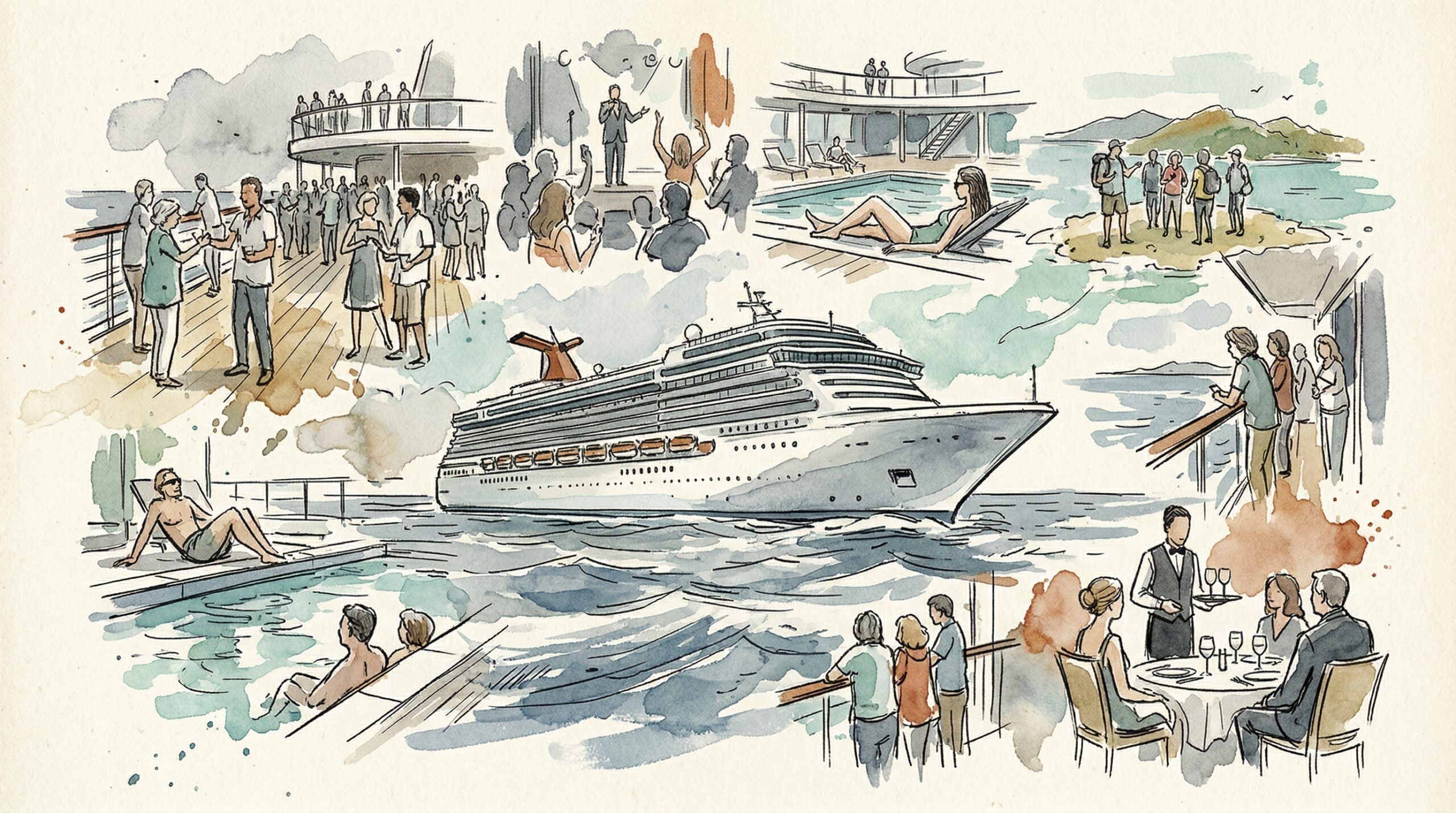

Cruise ships make you gain 10 pounds. You’ll definitely get norovirus. Only old people cruise. The internet is full of cruise “facts” that range from outdated to completely fabricated. Let’s bust the myths that might be keeping you from an incredible vacation.
Last updated: April 26, 2026
⏱️ 8 min read
Myth 1: “You’ll Definitely Get Sick on a Cruise”
The Truth: Norovirus outbreaks make headlines precisely because they’re newsworthy—meaning rare. The CDC’s Vessel Sanitation Program tracks outbreaks on cruise ships, and the data shows illness rates are comparable to land-based resorts and hotels.
Cruise ships actually maintain higher sanitation standards than most vacation environments. Those hand sanitizer stations everywhere? They work. The constant cleaning? It helps. Your odds of getting sick on a cruise are no higher than any other vacation—possibly lower given the sanitation obsession.
Myth 2: “Cruise Ships Are Floating Petri Dishes”
The Truth: The opposite is closer to reality. Modern cruise ships have hospital-grade air filtration systems, aggressive cleaning protocols, and medical facilities that rival urgent care clinics. When outbreaks do occur, cruise lines are legally required to report them—creating a reporting bias that makes cruise illness seem more common than illness at hotels, where no such reporting exists.
Myth 3: “Cruising Is Only for Old People”
The Truth: The average cruise passenger age varies dramatically by cruise line, itinerary, and sailing date. Caribbean cruises during spring break? Full of families and young adults. Mediterranean cruises in September? Yes, an older demographic. Alaska expedition cruises? Mixed ages of adventure seekers.
Cruising has evolved to serve every age group. Lines like Virgin Voyages specifically target adults under 50. Carnival’s party atmosphere skews younger. Choose your line and timing based on who you want to cruise with.
Myth 4: “You’ll Gain 10 Pounds on a Cruise”
The Truth: Studies show the average cruise weight gain is 0.8 to 1.5 pounds—nowhere near the 10-pound horror stories. And that gain is comparable to any vacation where you eat well and relax.
Modern cruise ships offer fitness centers, jogging tracks, healthy dining options, and activities that can keep you moving. The 10-pound myth comes from people who choose to eat at the buffet six times daily. Cruising doesn’t make you overeat—choices do.
Myth 5: “Cruises Are Too Expensive”
The Truth: Cruises often deliver better value per day than comparable land-based vacations. Your cruise fare includes accommodation, most meals, entertainment, transportation between destinations, and access to ship amenities. Calculate what a week of hotels, restaurant meals, shows, and inter-city travel would cost separately—cruising frequently wins the value comparison.
Yes, there are expensive cruises. There are also $50/night mainstream sailings with included food and entertainment. Price range is enormous.
Myth 6: “You’ll Be Trapped with Nothing to Do”
The Truth: Modern cruise ships struggle with the opposite problem—too much to do. A typical daily schedule includes: fitness classes, cooking demonstrations, trivia competitions, pool games, live music, production shows, comedy acts, casino gaming, spa services, specialty restaurants, enrichment lectures, kids’ programs, teen clubs, movies, sports courts, waterslides, and more.
The complaint isn’t boredom—it’s FOMO from not being able to do everything.
Myth 7: “Cruise Cabins Are Tiny and Claustrophobic”
The Truth: Inside cabins on budget sailings? Yes, compact (but functional). However, cabin options range from 150-square-foot interiors to 2,000+ square-foot suites with multiple rooms, private pools, and butler service. Choose the cabin that fits your budget and space needs.
Also: you’re on vacation. How much time do you really spend in your hotel room? The cabin is for sleeping and changing—the ship is your living space.
Myth 8: “The Food Isn’t Good”
The Truth: Cruise ship food has evolved dramatically. Celebrity Cruises features chefs trained at Le Cordon Bleu. Oceania’s culinary program rivals fine dining anywhere. Even mainstream lines serve steakhouse-quality meals in their specialty restaurants.
Is buffet food exceptional? Not usually. But claiming cruise food is uniformly bad ignores the specialty dining options, the main dining room variety, and the overall quality improvements across the industry.
Myth 9: “You’re Stuck on the Ship”
The Truth: Cruise itineraries include port days specifically for exploring destinations. Most Caribbean cruises include 3-4 ports. Mediterranean cruises might visit 5-6 countries. You’re literally traveling to multiple places, getting off the ship, and exploring.
If anything, the criticism should be “not enough time in each port”—the opposite of being stuck.
Myth 10: “Cruises Are All the Same”
The Truth: The difference between a Carnival party cruise and a Viking cultural expedition is enormous. The difference between a Royal Caribbean mega-ship and a Windstar sailing yacht is incomparable. Luxury, mainstream, expedition, river, ocean, adult-only, family-focused—cruising is a category, not a singular experience.
Saying “I don’t like cruises” based on one experience is like saying “I don’t like restaurants” after visiting one diner.
The Bottom Line
Most cruise myths stem from outdated information, isolated incidents blown into trends, or simple misunderstanding of modern cruising. Research specific cruise lines and ships, read recent reviews, and make informed decisions rather than avoiding cruising based on myths.
Which myth surprised you most? Share in the comments! Follow Ship Tea for more cruise truth-telling and the sassiest commentary on the seven seas.



Try our free cruise games & calculators
Explore real CDC inspection scores and outbreak data for every cruise ship.