
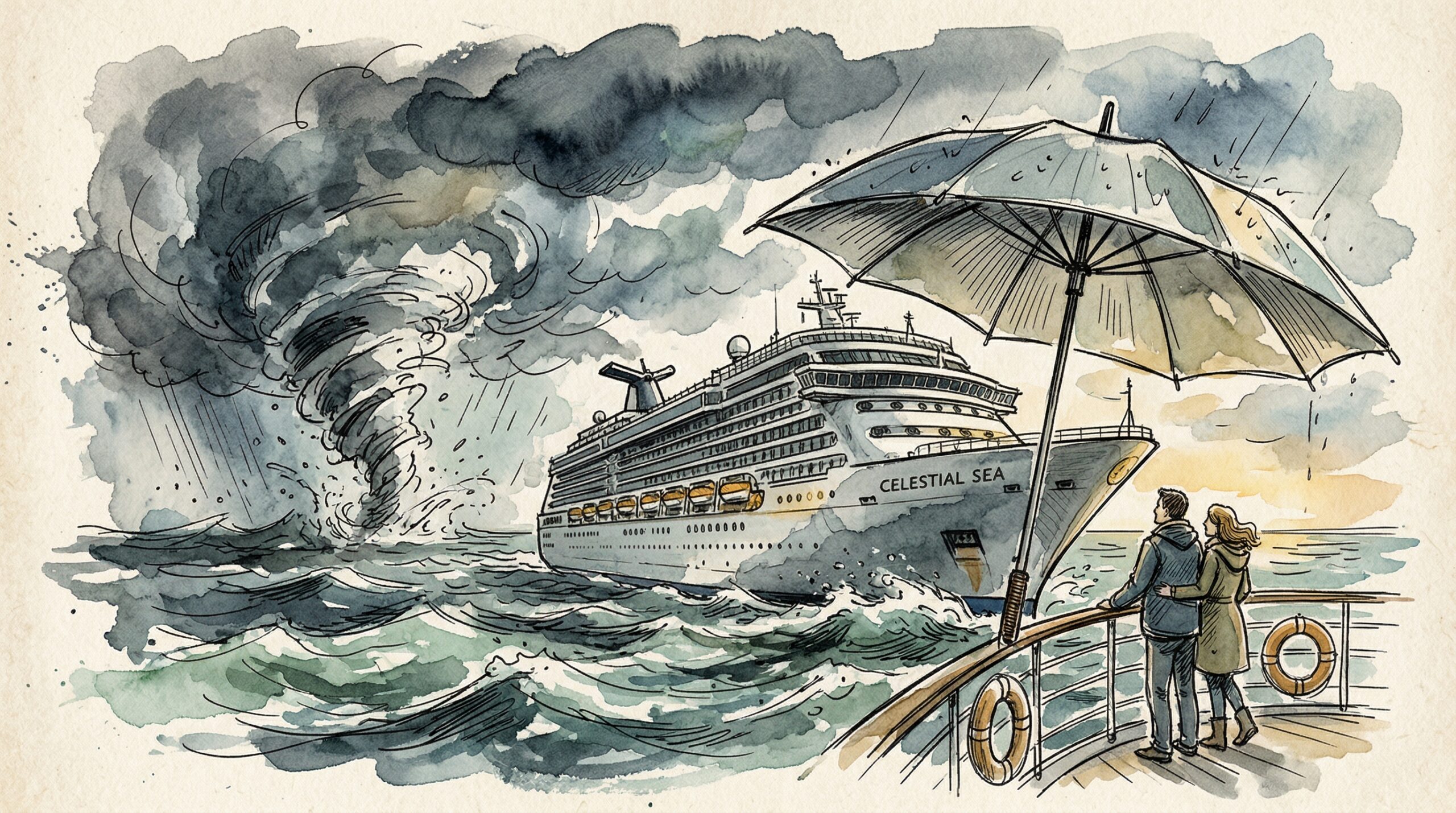

Hurricane season runs June through November in the Atlantic and Caribbean—prime cruising territory for millions of passengers. Should you cancel your cruise? Rebook for different dates? Sail anyway and hope for the best? Here’s your comprehensive guide to navigating cruise vacations during hurricane season with confidence and appropriate caution.
Last updated: March 23, 2026
⏱️ 9 min read
Understanding Hurricane Season and Cruising
Let’s establish the timeline: Atlantic hurricane season officially runs June 1 through November 30, with peak activity concentrated from mid-August through late October. The Caribbean, Gulf of Mexico, Bahamas, and Atlantic seaboard all fall within the hurricane-prone zone.
But here’s the crucial context that headlines never provide: millions of successful Caribbean cruises sail every hurricane season without major incident. Cruise lines have invested heavily in sophisticated weather monitoring and flexible itinerary systems specifically designed to navigate around storms safely. A hurricane somewhere in the Caribbean doesn’t automatically doom your cruise—it often means your itinerary will change to avoid the storm’s path.
How Cruise Lines Actually Handle Hurricanes
Modern cruise ships have access to meteorological data and forecasting tools that exceed what most news outlets report. Cruise lines employ dedicated meteorologists who track developing storms days before they threaten shipping lanes, providing constant updates to ship captains and corporate operations teams.
Common cruise line responses to approaching hurricanes include:
- Itinerary modifications: Swapping scheduled ports for alternatives outside the storm’s projected path
- Speed adjustments: Speeding up departure or slowing arrival to let storms pass through certain areas
- Route alterations: Taking longer routes around weather systems when direct paths pose risk
- Complete port substitutions: Replacing Caribbean destinations with Mexican ports or vice versa
- Extended sea days: Staying at sea until weather clears rather than attempting port calls in dangerous conditions
- Homeport changes: In extreme cases, moving embarkation/debarkation to different ports
The key advantage ships hold: they can travel 500+ miles in a single day. Hurricanes, while massive and dangerous, are trackable and predictable enough that ships can simply go somewhere else. Your itinerary may change dramatically, but the ship avoids the storm.
What Cruise Line Policies Actually Guarantee
Most cruise lines have weather-related policies, but read the fine print carefully to understand what’s actually covered:
What you typically CAN expect if hurricanes affect your cruise:
- Itinerary changes (different ports, reordered visits, substitute destinations)
- Onboard credit for significantly missed ports
- Full refund or future cruise credit if the cruise is outright canceled
- Rebooking assistance for future sailings
What you typically WON’T get without specific insurance coverage:
- Refund because you’re nervous about a storm that hasn’t actually affected your cruise
- Compensation for independently booked flights that get canceled or rescheduled
- Hotel costs if embarkation is delayed due to weather
- Refund for itinerary changes (ports are explicitly “subject to change” in cruise contracts)
- Reimbursement for missed prepaid shore excursions at canceled ports
Travel Insurance: Hurricane Season Must-Haves
Standard cruise line insurance policies often have significant hurricane-related coverage gaps. For hurricane season travel, look specifically for policies offering:
- “Cancel for any reason” (CFAR) coverage: Typically returns 50-75% of non-refundable trip costs for any cancellation reason—including personal concern about approaching storms
- Trip interruption coverage: Covers additional expenses if you’re stranded or evacuated mid-trip
- Travel delay coverage: Reimburses hotels and meals if flights are canceled or significantly delayed
- Emergency evacuation coverage: Covers transportation costs if you need to be extracted from a port area affected by weather
Critical timing requirement: Most CFAR policies must be purchased within 10-21 days of your initial cruise deposit to qualify for that coverage level. Don’t wait until a storm is forming to buy insurance—by then, it’s too late for meaningful coverage.
Should You Actually Cruise During Hurricane Season?
Consider these factors when deciding whether hurricane season cruising makes sense for your situation:
Compelling reasons to say yes:
- Significantly lower cruise pricing (often 20-40% below peak season)
- Smaller crowds at ports and reduced ship capacity
- Flexibility about destinations—you’ll enjoy wherever the ship goes
- Southern Caribbean itineraries that sit below the primary hurricane belt
- Understanding that most hurricane season cruises sail without weather incidents
Valid reasons to reconsider or choose different timing:
- Specific bucket-list ports are absolutely non-negotiable for your trip
- You’ll stress constantly checking weather forecasts instead of relaxing
- Non-refundable flight arrangements create significant financial risk
- Special occasion trip (wedding, anniversary) requires specific itinerary
- You have limited vacation time and can’t risk a disrupted experience
Lower-Risk Hurricane Season Options
Not all Caribbean cruises carry equal hurricane risk. Geography matters:
Lower risk destinations and timing:
- Southern Caribbean (Aruba, Bonaire, Curaçao, ABC islands) sits well below typical hurricane tracks
- Panama Canal transits often navigate around the primary hurricane zone
- Mexican Riviera (Pacific side) follows completely different weather patterns
- Europe and Alaska (obviously different regions, but often overlooked alternatives)
- Early June and late November bookings catch shoulder periods with lower storm probability
Higher risk periods and regions:
- Mid-August through early October represents peak statistical hurricane activity
- Bahamas and Eastern Caribbean see the most storm activity historically
- Gulf of Mexico cruises face additional risk from storms entering that confined water body
- Western Caribbean can be affected by storms tracking through the Gulf
What to Do If a Storm Threatens Your Cruise
Before your departure:
- Monitor your cruise line’s official communications (app notifications, email updates)
- Check the National Hurricane Center (nhc.noaa.gov) for official forecasts and tracking
- Don’t panic based on social media speculation—official sources only
- Contact the cruise line directly if you have specific questions about your sailing
- Review your travel insurance policy’s hurricane and weather provisions
- Have contingency plans for flights and accommodations if changes occur
During your cruise if weather develops:
- Attend captain’s briefings if itinerary changes are announced
- Be flexible and patient with fellow passengers and overworked crew
- Embrace unexpected sea days—they’re often the most relaxing cruise experiences
- Keep your phone charged for updates and communication
- Trust that the ship’s officers are making decisions to keep everyone safe
When Canceling Actually Makes Sense
There’s no shame in canceling if circumstances warrant genuine concern:
- A major hurricane is forecasted to directly impact your embarkation port within 48-72 hours
- Your home region is under evacuation orders and you need to be available
- The anxiety of weather uncertainty would eliminate any enjoyment from the trip
- Your travel insurance allows cancellation with reasonable reimbursement
Travel should be enjoyable. If you’ll spend your entire cruise anxiously refreshing weather apps instead of relaxing, the value equation doesn’t work regardless of whether the storm actually affects your ship.
The Bottom Line
Hurricane season cruising is absolutely viable—and often excellent—for travelers willing to accept potential itinerary flexibility. The price savings are real and substantial, the crowds are meaningfully smaller, and the vast majority of cruises sail without significant weather incidents. Protect yourself with comprehensive travel insurance purchased early, maintain realistic expectations about the possibility of port changes, choose lower-risk itineraries when possible, and embrace whatever adventure the voyage provides.
Have you cruised during hurricane season? Share your experience in the comments! Follow Ship Tea for more cruise planning wisdom and the sassiest commentary on the seven seas.
Try our free cruise games & calculators
Explore real CDC inspection scores and outbreak data for every cruise ship.